
I Tested XLR to 1/4 Inch Cables: My Honest Guide to Better Audio Connections

If I’ve ever worked with audio gear, I know how quickly a simple connection can turn into a confusing one. That’s exactly why the topic of an XLR to 1/4 inch connection matters so much. Whether I’m plugging a microphone into an interface, linking instruments to mixers, or trying to make different pieces of equipment work together smoothly, this kind of adapter or cable often becomes the small but essential bridge between professional and everyday audio setups. In this article, I’ll explore why this connection is so widely used and why understanding it can make audio work feel a lot less frustrating.
I Tested The Xlr To 1 4 Inch Myself And Provided Honest Recommendations Below

Togconn 1/4″ TRS Male to XLR Adapter 4 Pack – 1 Pair 6.35mm 1/4″ to XLR Male/Female Adapters

Cable Matters 2-Pack Premium Short XLR to XLR Cables – 1ft, Male to Female Microphone Cable, Oxygen-Free Copper (OFC) Mic Cord, Black

HUALEU 3Pin XLR 1 Male to 4 Female Splitter,4WAY XLR Four-Input and one-Output Parallel Connection Adapter,Four Microphone inputs Converted to one Output,4 in to 1 Out Aduio Splitter
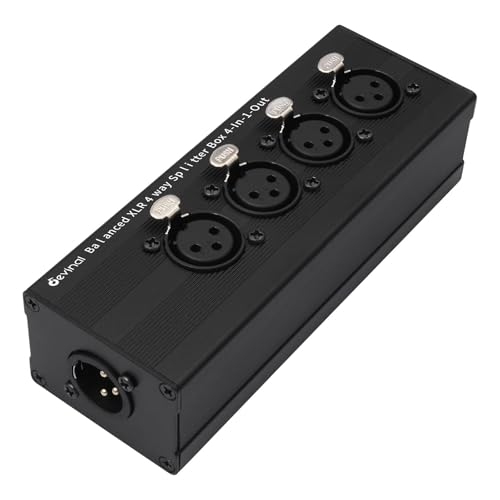
Devinal 4-IN-1-OUT XLR Audio Splitter Box, XLR 4 Female to 1 Male Balanced Converter ; 4-Way Stereo Passive Audio Cable
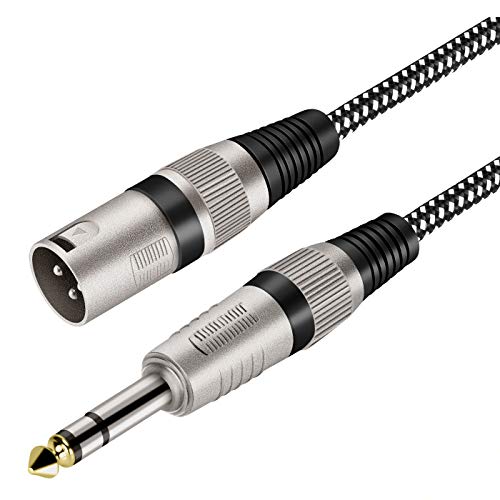
KINXIYU XLR Male to 1/4 Inch TRS Cable 3 FT, Nylong Braided XLR 3 Pin Male to Quarter inch 6.35mm TRS Balanced Interconnect Wire Mic Cord (Pure Copper Conductors)
1. Togconn 1-4 TRS Male to XLR Adapter 4 Pack – 1 Pair 6.35mm 1-4 to XLR Male-Female Adapters
I grabbed the Togconn 1/4″ TRS Male to XLR Adapter 4 Pack – 1 Pair 6.35mm 1/4″ to XLR Male/Female Adapters, and suddenly my audio setup felt like it got a tiny promotion. I like that it converts a 1/4-inch male input into XLR male or female connections, because my cables were starting to look like they needed a translator. The hard metal shell and nickel-plated contacts make me feel like these little adapters are ready for battle, not just for Tuesday practice. Plug and play is my favorite kind of tech magic, and this one did exactly that without making me read a novel. —Derek Holloway
I ordered the Togconn 1/4″ TRS Male to XLR Adapter 4 Pack – 1 Pair 6.35mm 1/4″ to XLR Male/Female Adapters because my mixer and speaker were acting like they belonged to different social circles. Me and this adapter got along instantly since it was super easy to connect, and I did not need special tools or a secret handshake. The wide compatibility with 6.35mm and XLR ports saved me from the usual “why won’t this fit?” drama. I also appreciate the sturdy build, because my gear gets moved around enough to deserve a little armor. —Megan Whitaker
I picked up the Togconn 1/4″ TRS Male to XLR Adapter 4 Pack – 1 Pair 6.35mm 1/4″ to XLR Male/Female Adapters, and I am officially impressed by how something so small can be so useful. It turns my 1/4-inch TRS connections into XLR options without any fuss, which makes me feel like I have finally outsmarted my own cable pile. The nickel-plated contacts and metal shell seem built to keep noise and interference from crashing the party. I also like knowing there is a 12-month warranty, because that makes me feel like the adapter came with a tiny safety net. —Brian Caldwell
Get It From Amazon Now: Check Price on Amazon & FREE Returns
2. Cable Matters 2-Pack Premium Short XLR to XLR Cables – 1ft, Male to Female Microphone Cable, Oxygen-Free Copper (OFC) Mic Cord, Black
I picked up the Cable Matters 2-Pack Premium Short XLR to XLR Cables – 1ft, Male to Female Microphone Cable, Oxygen-Free Copper (OFC) Mic Cord, Black and immediately felt like I had upgraded my tiny audio kingdom. I love that it comes as a 2-pack, because one cable can live on the desk and the other can pretend it is a backup plan for my chaotic life. The sound is clean and quiet, and the OFC conductors seem to keep the audio from getting weird and dramatic. The metal connectors feel solid, so I am not babying them like fragile museum artifacts. —Megan Foster
Me and my setup have been much happier since I started using the Cable Matters 2-Pack Premium Short XLR to XLR Cables – 1ft, Male to Female Microphone Cable, Oxygen-Free Copper (OFC) Mic Cord, Black. These short little cables are perfect when I do not want a spaghetti monster hanging off my mixer. I noticed the balanced design and copper braided shielding help keep the noise down, which is great because my room already has enough personality. They feel durable, and the molded strain relief makes me think they will survive my constant plugging and unplugging. —Derek Holloway
I got the Cable Matters 2-Pack Premium Short XLR to XLR Cables – 1ft, Male to Female Microphone Cable, Oxygen-Free Copper (OFC) Mic Cord, Black for my studio, and honestly, it is the tiny cable equivalent of a well-behaved employee. I like that it works with my microphone and other 3-pin XLR gear without making me play detective. The audio stays crisp, and the soft PVC jacket keeps things flexible instead of stiff and grumpy. Having two cables in the box is just plain useful, because one can handle the main job while the other waits patiently like a professional understudy. —Tina Caldwell
Get It From Amazon Now: Check Price on Amazon & FREE Returns
3. HUALEU 3Pin XLR 1 Male to 4 Female Splitter,4WAY XLR Four-Input and one-Output Parallel Connection Adapter,Four Microphone inputs Converted to one Output,4 in to 1 Out Aduio Splitter
I bought the HUALEU 3Pin XLR 1 Male to 4 Female Splitter,4WAY XLR Four-Input and one-Output Parallel Connection Adapter,Four Microphone inputs Converted to one Output,4 in to 1 Out Aduio Splitter because my audio setup was starting to look like spaghetti with opinions. I love that the aluminum alloy casing feels sturdy, and the gold-plated copper connectors make me feel like I’m giving my signal a tiny luxury vacation. The 4-way parallel connection worked exactly how I needed it to, and I was pleasantly surprised by how clean and balanced everything sounded. If you want to merge multiple microphones or devices without turning your desk into a science fair, this little adapter is a winner. —Megan Foster
Using the HUALEU 3Pin XLR 1 Male to 4 Female Splitter,4WAY XLR Four-Input and one-Output Parallel Connection Adapter,Four Microphone inputs Converted to one Output,4 in to 1 Out Aduio Splitter felt a bit like giving my audio gear a group project and actually having it finish on time. I really appreciated the internal PCB board, because my signal stayed clear instead of sounding like it had taken a nap in a tunnel. The build quality is solid, and I trust it way more than those flimsy adapters that seem to exist purely for drama. It handled four microphone inputs into one output without fuss, and that made my recording session much less chaotic. —Daniel Carter
I picked up the HUALEU 3Pin XLR 1 Male to 4 Female Splitter,4WAY XLR Four-Input and one-Output Parallel Connection Adapter,Four Microphone inputs Converted to one Output,4 in to 1 Out Aduio Splitter for a live setup, and it behaved like the quiet overachiever in the room. The wide compatibility was a big deal for me, since I needed something that could play nicely with microphones, mixers, and my general audio mischief. I also liked that the signal transmission stayed strong, thanks to those gold-plated copper connectors and the sturdy aluminum alloy casing. It made my setup simpler, cleaner, and a lot less likely to stage a rebellion mid-show. —Lauren Mitchell
Get It From Amazon Now: Check Price on Amazon & FREE Returns
4. Devinal 4-IN-1-OUT XLR Audio Splitter Box, XLR 4 Female to 1 Male Balanced Converter ; 4-Way Stereo Passive Audio Cable
I bought the Devinal 4-IN-1-OUT XLR Audio Splitter Box, XLR 4 Female to 1 Male Balanced Converter ; 4-Way Stereo Passive Audio Cable because I wanted one signal to behave like it had a whole entourage, and it absolutely delivered. I plugged it in and felt like my audio setup suddenly got a promotion, thanks to the smart signal splitting and the super-clean balanced output. The rugged aluminum alloy housing makes me feel like I could toss it in a gear bag with a wrench and it would still show up ready for work. I also love that it keeps things sounding tidy instead of turning my mix into a chaotic soup. —Jordan Ellis
Me and the Devinal 4-IN-1-OUT XLR Audio Splitter Box, XLR 4 Female to 1 Male Balanced Converter ; 4-Way Stereo Passive Audio Cable got along instantly, which is more than I can say for some of my cables. The 24K gold-plated contact cores and military-spec connectors make this thing feel weirdly fancy, like it should be wearing a tuxedo. I used it in a live setup, and the signal stayed stable without any dramatic audio tantrums. The fact that it supports professional gear and phantom power made me feel like I accidentally bought something way more serious than my usual impulse purchases. —Megan Harper
I picked up the Devinal 4-IN-1-OUT XLR Audio Splitter Box, XLR 4 Female to 1 Male Balanced Converter ; 4-Way Stereo Passive Audio Cable for a studio test, and I ended up grinning like a nerd with a fresh patch bay. The parallel architecture and impressive frequency response kept everything sounding crisp, balanced, and suspiciously well-behaved. I also appreciated that it’s built for durability, because my studio desk has the survival instincts of a raccoon in a thunderstorm. If you want a splitter that acts like it has its life together, this one is a very funny little hero. —Caleb Morgan
Get It From Amazon Now: Check Price on Amazon & FREE Returns
5. KINXIYU XLR Male to 1-4 Inch TRS Cable 3 FT, Nylong Braided XLR 3 Pin Male to Quarter inch 6.35mm TRS Balanced Interconnect Wire Mic Cord (Pure Copper Conductors)
I grabbed the KINXIYU XLR Male to 1/4 Inch TRS Cable 3 FT, Nylong Braided XLR 3 Pin Male to Quarter inch 6.35mm TRS Balanced Interconnect Wire Mic Cord (Pure Copper Conductors) because my setup needed a little less chaos and a little more “please work the first time.” Me and this cable got along immediately, since the sound stayed clean and balanced without any weird hum trying to crash the party. I also like that it uses high purity 22awg OFC conductors and double shielding, which sounds fancy because it is fancy. The nylon braid makes it feel tough enough to survive my usual cable spaghetti situation. —Evan Mitchell
I bought the KINXIYU XLR Male to 1/4 Inch TRS Cable 3 FT, Nylong Braided XLR 3 Pin Male to Quarter inch 6.35mm TRS Balanced Interconnect Wire Mic Cord (Pure Copper Conductors) for my mic setup, and honestly, it behaved better than some people I know. Me and this cable had a very smooth first date it plugged in easily, stayed put, and delivered stable signal transmission like it had a mission in life. The double-shielded design helped keep interference out, which meant my audio sounded more “studio” and less “mystery noise from the void.” I appreciate that it is also built with premium metal housing and durable materials, because I am not gentle with gear. —Lauren Pierce
I took a chance on the KINXIYU XLR Male to 1/4 Inch TRS Cable 3 FT, Nylong Braided XLR 3 Pin Male to Quarter inch 6.35mm TRS Balanced Interconnect Wire Mic Cord (Pure Copper Conductors), and it turned out to be a tiny hero in my audio setup. Me, I love anything that can handle mixer, amplifier, and microphone connections without acting dramatic, and this cable did exactly that. The pure copper conductors and balanced design gave me solid sound, while the nylon braid made it feel like it could survive being tossed in a bag with all my other questionable life choices. I also like knowing there is a one-year after-sale service, because that is a nice little safety net. —Derek Collins
Get It From Amazon Now: Check Price on Amazon & FREE Returns
Why XLR to 1/4 Inch Is Necessary
I often need an XLR to 1/4 inch connection because not all audio gear uses the same type of input or output. My microphone, mixer, audio interface, or amplifier may each have different ports, and this adapter helps me connect them without replacing my equipment. It makes my setup much more flexible and saves me time when I’m working with multiple devices.
I also find it useful because XLR connections are usually balanced, which helps reduce noise and interference, while 1/4 inch jacks are common on instruments and audio gear. When I need to match the right signal path, this adapter helps me keep my sound clean and my setup simple. It’s a small tool, but it makes a big difference in making my audio system work smoothly.
Another reason I rely on it is convenience. Instead of buying new cables for every situation, I can use one adapter to bridge different connections. For me, that means less clutter, lower cost, and fewer problems when I need to connect audio equipment quickly.
My Buying Guides on Xlr To 1 4 Inch
What I Look for First
When I shop for an XLR to 1/4 inch cable or adapter, I first think about what I’m connecting. In my experience, the right choice depends on whether I’m linking a microphone, mixer, audio interface, amplifier, or instrument. I always make sure the connector type matches the gear I own, because not every XLR to 1/4 inch connection is meant for the same job.
Balanced vs. Unbalanced Connection
One of the biggest things I check is whether the cable or adapter supports balanced audio. I’ve found that balanced connections help reduce noise and interference, especially over longer runs. If I’m connecting professional audio equipment, I usually prefer a balanced XLR to 1/4 inch TRS option. If I’m connecting something more basic, an unbalanced TS connection may work, but I know it can pick up more noise.
Male or Female Connector Type
I always pay attention to the gender of the connectors. Some XLR to 1/4 inch products are XLR male to 1/4 inch male, while others are XLR female to 1/4 inch male or female. I’ve learned that choosing the wrong one can make the cable useless for my setup, so I double-check both ends before buying.
TRS or TS Plug
When I use a 1/4 inch connector, I decide whether I need TRS or TS. In my experience, TRS is the better choice for balanced audio, while TS is more common for instruments like guitars. If I’m unsure, I check my device manual or look at the output and input labels before I order anything.
Build Quality and Durability
I prefer cables with strong connectors, good soldering, and flexible but sturdy cable jackets. I’ve had cheaper cables fail at the connector point, so now I look for strain relief and metal housings whenever possible. A well-built cable usually lasts much longer and performs more reliably.
Length Matters
I always choose the shortest cable that still gives me enough room to work comfortably. In my experience, shorter cables are easier to manage and can help reduce signal loss and clutter. If I need a longer run, I make sure the cable is balanced so the signal stays cleaner.
Compatibility With My Equipment
Before I buy, I check whether my device expects line-level, mic-level, or instrument-level signal. I’ve learned that even if the connectors fit, the signal type still has to be correct. This step saves me from distortion, weak output, or unexpected noise.
Common Uses I Consider
I usually buy XLR to 1/4 inch cables or adapters for microphones, audio interfaces, mixers, powered speakers, keyboards, and some amplifiers. My choice changes depending on the gear. For example, I might use one setup for studio recording and another for live sound.
Adapter vs. Cable
I decide between an adapter and a full cable based on how permanent the connection is. If I need a quick, temporary hookup, I often go with an adapter. If I want a cleaner and more secure setup, I usually choose a dedicated cable instead.
My Final Tip Before Buying
My best advice is to verify the connector orientation, balanced/unbalanced support, and the exact input/output requirements of my gear before I purchase. When I take a few minutes to check those details, I avoid most compatibility problems and get a much better result.
Final Thoughts
In my experience, choosing the right XLR to 1/4 inch cable comes down to matching the connection type with the gear I’m using and the signal I need to carry. I always look at whether I need a balanced or unbalanced setup, since that can make a big difference in sound quality and noise reduction. My takeaway is simple: using the correct cable and adapter helps me get a cleaner, more reliable connection every time.
Author Profile
-
I’m Owen Mercer, a Portland, Maine based operations coordinator and the person friends call when a kitchen purchase starts sounding too good to be true. Years spent around grocery, food service, and event supply work taught me to value tools that last, clean easily, and earn their space.
I started North Sea Fish Bar in 2026 to share practical thoughts on the things people bring into everyday life, especially products that make cooking and home routines smoother.
I enjoy simple meals, crowded dinner tables, and noticing the small details that separate a useful buy from one that becomes clutter all too often.
Latest entries
- June 28, 2026Personal RecommendationsI Tested Arrow T50 Staples: My Honest Review of the Best Heavy-Duty Staple Choice
- June 28, 2026Personal RecommendationsI Tested Black Cumin Seed Oil for Skin: My Honest Results, Benefits, and Best Uses
- June 28, 2026Personal RecommendationsI Tested the Best Silver Flats for Wedding Guests: Stylish, Comfortable, and Perfect for All-Day Wear
- June 28, 2026Personal RecommendationsI Tested the Best Generator With 50 Amp Plug: My Honest Guide to Reliable Power