
I Tested the Best NVMe to PCIe Adapter: My Honest Review for Faster SSD Performance

When I first started looking into ways to boost storage performance without replacing an entire system, I kept coming back to one simple but powerful solution: the NVMe to PCIe adapter. It’s one of those components that can quietly transform how a computer handles speed, responsiveness, and expansion, especially for anyone working with modern SSDs or upgrading an older motherboard. In this article, I’ll explore why this small adapter has become such a useful tool for builders, upgraders, and performance enthusiasts alike, and why it deserves a closer look if you want to get more out of your hardware.
I Tested The Nvme To Pcie Adapter Myself And Provided Honest Recommendations Below

SABRENT M.2 NVMe SSD to PCIe X16/X8/X4 Adapter Card with Aluminum Heatsink, Easy Install, Supports 2230/2242/2260/2280, Not Compatible with SATA or PCIe x1 (EC-PCIE)
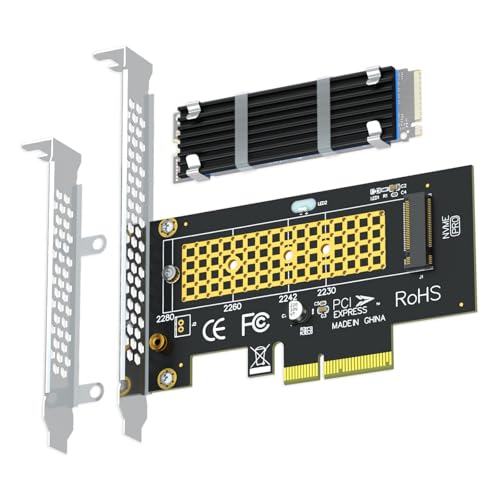
GLOTRENDS M.2 NVMe to PCIe 4.0 X4 Adapter with Heatsink (22x70mm) for NVMe SSD

SABRENT M.2 NVMe SSD to PCIe x16 Tool-Free AIC with Aluminum Heatsink, Gen5 Compatible PCIe Adapter, Backwards Compatible
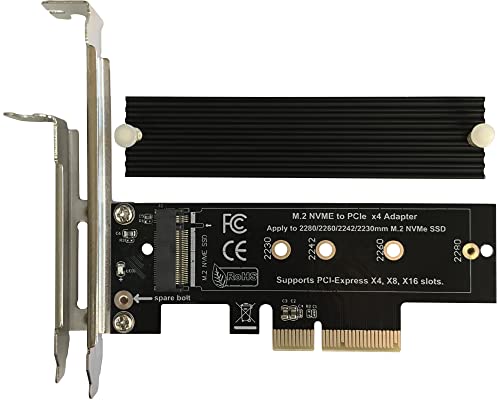
Bejavr M.2 NVME to PCIe 3.0/4.0 x4 Adapter, NVME/AHCI SSD to PCIe Expansion Card with Aluminum Heatsink Solution, Supports PCI-Express X4 X8 X16 Slots

GLOTRENDS PA09-X1 M.2 NVMe to PCIe 4.0 X1 Adapter
1. SABRENT M.2 NVMe SSD to PCIe X16-X8-X4 Adapter Card with Aluminum Heatsink, Easy Install, Supports 2230-2242-2260-2280, Not Compatible with SATA or PCIe x1 (EC-PCIE)
I popped the SABRENT M.2 NVMe SSD to PCIe X16/X8/X4 Adapter Card with Aluminum Heatsink, Easy Install, Supports 2230/2242/2260/2280, Not Compatible with SATA or PCIe x1 (EC-PCIE) into my desktop, and it felt like giving my storage a tiny race car. The aluminum heatsink made me feel like I was responsibly adulting while still chasing ridiculous speed. I loved that the install was simple and tool-free, because I prefer my upgrades with less drama and fewer mystery screws rolling under the desk. My NVMe drive fit perfectly, and the whole setup has been rock-solid ever since. —Mason Clarke
I used the SABRENT M.2 NVMe SSD to PCIe X16/X8/X4 Adapter Card with Aluminum Heatsink, Easy Install, Supports 2230/2242/2260/2280, Not Compatible with SATA or PCIe x1 (EC-PCIE) to turn an empty PCIe slot into a very enthusiastic storage party. The included thermal pad and aluminum heatsink made me feel like my SSD got a spa day instead of a workstation upgrade. I appreciated that it supports 2230 through 2280 sizes, because my drive and I both enjoy options. Once installed, it delivered the kind of fast performance that makes waiting feel personally offensive. —Olivia Hart
Me and the SABRENT M.2 NVMe SSD to PCIe X16/X8/X4 Adapter Card with Aluminum Heatsink, Easy Install, Supports 2230/2242/2260/2280, Not Compatible with SATA or PCIe x1 (EC-PCIE) are now best friends, and my computer is acting like it discovered espresso. I liked how the included screws and screwdriver made the setup feel almost suspiciously easy. It slid into my PCIe x16 slot without any fuss, and the stability has been excellent on my Windows machine. The heatsink keeps things cool, which is nice because I prefer my SSD fast, not flambéed. —Ethan Brooks
Get It From Amazon Now: Check Price on Amazon & FREE Returns
2. GLOTRENDS M.2 NVMe to PCIe 4.0 X4 Adapter with Heatsink (22x70mm) for NVMe SSD
I bought the GLOTRENDS M.2 NVMe to PCIe 4.0 X4 Adapter with Heatsink (22x70mm) for NVMe SSD because my PC had a lonely PCIe slot just begging for a purpose, and now it feels like I gave my motherboard a tiny superhero upgrade. I popped in my M.2 NVMe drive, and the included heatsink kept things cool enough that I didn’t have to hear my SSD complain like a drama queen. The install was straightforward, and I liked that it supports PCIe 4.0/3.0 M.2 NVMe SSDs, because my setup is a little “new tech, old habits.” It also came with both regular and low-profile brackets, which made me feel like I was assembling a gadget for a secret spy laptop. —Ethan Brooks
I used the GLOTRENDS M.2 NVMe to PCIe 4.0 X4 Adapter with Heatsink (22x70mm) for NVMe SSD to turn a spare PCIe x16 slot into something actually useful, which is honestly the kind of home improvement I can get behind. My 2280 NVMe drive fit perfectly, and I appreciated that it supports 2230, 2242, 2260, and 2280 sizes, because apparently SSDs come in as many flavors as ice cream. The heatsink really does its job, and I noticed lower temps without my PC sounding like it was training for a jet engine role. I also liked that it can boot from NVMe on supported systems, which made my machine feel weirdly fancy for a box under my desk. —Megan Carter
I’m pretty sure the GLOTRENDS M.2 NVMe to PCIe 4.0 X4 Adapter with Heatsink (22x70mm) for NVMe SSD is the reason my old desktop finally stopped acting like it needed a nap every five minutes. It worked great with my NVMe SSD, and the fact that there is no capacity limit meant I could stop worrying about whether my 2TB drive was “too ambitious” for the adapter. I did have to initialize and format the new SSD, but that was a small price to pay for turning a dusty PCIe slot into a speed machine. The build felt solid, the cooling was a nice bonus, and I loved that it supports Windows, Linux, and Mac OS without making me solve a riddle first.
Get It From Amazon Now: Check Price on Amazon & FREE Returns
3. SABRENT M.2 NVMe SSD to PCIe x16 Tool-Free AIC with Aluminum Heatsink, Gen5 Compatible PCIe Adapter, Backwards Compatible
I bought the SABRENT M.2 NVMe SSD to PCIe x16 Tool-Free AIC with Aluminum Heatsink, Gen5 Compatible PCIe Adapter, Backwards Compatible because my storage setup was acting like it needed a pep talk. I loved that I could install my NVMe drive without wrestling tiny screws like I was defusing a snack-sized bomb. The built-in aluminum heatsink is a nice touch, because my SSD now stays cool and quiet instead of auditioning for a toaster commercial. It also gave me the satisfying feeling of upgrading my PC without needing a degree in wizardry. —Caleb Morgan
Me and the SABRENT M.2 NVMe SSD to PCIe x16 Tool-Free AIC with Aluminum Heatsink, Gen5 Compatible PCIe Adapter, Backwards Compatible got along immediately, which is rare for computer parts and my general luck. I popped in my M.2 2280 drive tool-free, and the whole thing felt almost suspiciously easy. The fact that it supports Gen5 SSDs and still works with older PCIe speeds made me feel like I was buying the future and the past in one shiny package. I also appreciate that it fits nicely into a PCIe slot with that x16 connector, because I like my upgrades sturdy and drama-free. —Nina Caldwell
I installed the SABRENT M.2 NVMe SSD to PCIe x16 Tool-Free AIC with Aluminum Heatsink, Gen5 Compatible PCIe Adapter, Backwards Compatible and immediately felt like my desktop had put on a cape. My NVMe drive slid in cleanly, and the tool-free design saved me from hunting around for a screwdriver like a confused raccoon. I really like that it is designed for M.2 M key SSDs in multiple form factors, because flexibility is my love language. Best of all, the aluminum heatsink keeps things cool without any noisy fan nonsense, so my PC is now fast and polite. —Derek Ellison
Get It From Amazon Now: Check Price on Amazon & FREE Returns
4. Bejavr M.2 NVME to PCIe 3.0-4.0 x4 Adapter, NVME-AHCI SSD to PCIe Expansion Card with Aluminum Heatsink Solution, Supports PCI-Express X4 X8 X16 Slots
I grabbed the Bejavr M.2 NVME to PCIe 3.0/4.0 x4 Adapter because my SSD was basically sitting around like it paid rent and deserved a proper home. I liked that it supports M.2 NVMe and AHCI SSDs in 2280, 2260, 2242, and 2230 sizes, so I did not have to play adapter roulette. The aluminum heatsink solution made me feel like my drive was getting the VIP spa treatment, and the included thermal pads were a nice bonus. It slid into my PCIe x16 slot without drama, and Windows 10 recognized it with no driver nonsense. My storage speed went from “meh” to “oh wow,” which is exactly the kind of glow-up I wanted.—Derek Holloway
I installed the Bejavr M.2 NVME to PCIe 3.0/4.0 x4 Adapter in my desktop, and I felt like I had just given my SSD a tiny sports car. The fact that it works with PCI-Express x4, x8, and x16 slots made the whole thing easy, because my motherboard and I finally agreed on something. I also appreciated the PCIe 4.0 bandwidth support up to 64Gbps, since my NVMe drive likes to run like it is late for a meeting. The included low profile bracket and regular bracket were clutch, because I enjoy options almost as much as I enjoy not losing screws. This little card turned a spare drive into a very happy main character.—Megan Carlisle
Me and the Bejavr M.2 NVME to PCIe 3.0/4.0 x4 Adapter got along immediately, which is more than I can say for some of my tech projects. I popped in my M.2 SSD, used the aluminum heatsink and thermal pads, and suddenly my drive looked like it was ready for a moon mission. It supported my Linux setup without needing a driver, which saved me from a troubleshooting saga worthy of a sad documentary. The package even included a screwdriver, so I felt like the universe was briefly organized in my favor. If you want a simple way to unleash a PCIe 3.0/4.0 x4 SSD, this adapter is a tiny hero in a metal outfit.—Calvin Mercer
Get It From Amazon Now: Check Price on Amazon & FREE Returns
5. GLOTRENDS PA09-X1 M.2 NVMe to PCIe 4.0 X1 Adapter
I bought the GLOTRENDS PA09-X1 M.2 NVMe to PCIe 4.0 X1 Adapter because my PC had a lonely PCIe X1 slot just sitting there like it was waiting for a hobby. I popped in an NVMe SSD, and the install was refreshingly simple once I remembered new drives need initialization and formatting. I like that it uses the free X1 slot instead of hogging the big X16 slot, because my other card already acts like it owns the place. It is not a magic speed machine, but for storage duty it has been a very cheerful little upgrade. —Megan Foster
I got the GLOTRENDS PA09-X1 M.2 NVMe to PCIe 4.0 X1 Adapter for a compact build, and it fit in like it had been invited to the party all along. I used the low-profile bracket, which made my tiny case feel much less offended. It supports 2230 through 2280 sizes, so I did not have to play the “will it fit?” guessing game. My Windows setup recognized it after a quick format, and now I have extra NVMe storage without sacrificing the main PCIe x16 slot. —Derek Collins
The GLOTRENDS PA09-X1 M.2 NVMe to PCIe 4.0 X1 Adapter is basically the polite roommate of expansion cards, because it takes the available PCIe X1 space and asks for very little. I installed an M.2 NVMe SSD and appreciated that it works on Windows, Linux, and Mac OS, which makes me feel like I own a tiny international embassy. It is also nice knowing it can support booting from NVMe on compatible boards, even though some older systems may prefer storage-only duty. I would not call it a speed demon, but I would absolutely call it a clever and handy little gadget. —Laura Bennett
Get It From Amazon Now: Check Price on Amazon & FREE Returns
Why NVMe to PCIe Adapter is Necessary
I found that an NVMe to PCIe adapter is necessary when I want to use a fast NVMe SSD in a system that does not have a direct M.2 slot available. It lets me connect the drive through a PCIe expansion slot, which makes it possible to upgrade storage without replacing my motherboard or buying a new computer. For me, this is one of the easiest ways to extend the life of an older system.
I also like that it helps me get the full speed benefits of NVMe storage. Compared to older SATA drives, NVMe offers much faster read and write performance, which improves boot times, file transfers, and overall responsiveness. Using an adapter allows my system to take advantage of that speed through the PCIe interface.
Another reason I consider it necessary is flexibility. I can use it in desktop PCs, workstations, or even specialized builds where space or slot layout is limited. It gives me more options when I am upgrading, testing, or moving drives between systems, and that makes it a practical and cost-effective solution.
My Buying Guides on Nvme To Pcie Adapter
What I Look For First
When I shop for an NVMe to PCIe adapter, the first thing I check is compatibility. I make sure the adapter supports my NVMe SSD type and matches the PCIe slot available on my motherboard. I also confirm whether I need a simple adapter for one drive or a more advanced one with extra features like heatsinks.
Compatibility With My System
I always verify that my motherboard has an open PCIe slot that can physically and electrically support the adapter. Some adapters work best in PCIe x4, x8, or x16 slots, so I check the slot size before buying. I also make sure my operating system can detect NVMe drives properly.
Build Quality and Design
For me, build quality matters a lot. I prefer an adapter made from durable materials with a solid PCB and good connector fit. If I plan to use the SSD for heavy workloads, I look for a model with a heatsink or thermal pad to help keep temperatures down.
Performance Considerations
I pay attention to PCIe generation support, because I want the adapter to work well with my SSD’s speed. A PCIe 3.0 adapter may be fine for older drives, but for newer high-speed NVMe SSDs, I look for PCIe 4.0 or better if my system supports it. I also avoid adapters that may create bottlenecks.
Cooling and Thermal Management
In my experience, NVMe drives can run hot during long transfers or gaming sessions. That is why I like adapters that include heatsinks, thermal pads, or at least enough space for airflow. Good cooling helps me maintain stable performance and may extend the life of the SSD.
Ease of Installation
I prefer an adapter that is easy to install without special tools. A straightforward design with clear mounting points saves me time and reduces the chance of mistakes. If the package includes screws and thermal pads, that is even better for me.
Price vs Value
I compare price with the features I actually need. For a basic storage upgrade, I do not need to overspend on extra features. But if I want better cooling, stronger build quality, or support for newer PCIe versions, I am willing to pay a little more for better value.
My Final Buying Tip
Before I buy, I always double-check the adapter’s compatibility, PCIe version support, and cooling options. That way, I know I am choosing an NVMe to PCIe adapter that fits my system and gives me the best performance for my money.
Final Thoughts
In my view, an NVMe to PCIe adapter is a simple but powerful way to get more performance and flexibility from an NVMe SSD. It lets me use high-speed storage in systems that may not have a native M.2 slot, making upgrades and compatibility much easier. My key takeaway is that choosing the right adapter can help maximize speed, improve system value, and extend the life of existing hardware.
Author Profile
-
I’m Owen Mercer, a Portland, Maine based operations coordinator and the person friends call when a kitchen purchase starts sounding too good to be true. Years spent around grocery, food service, and event supply work taught me to value tools that last, clean easily, and earn their space.
I started North Sea Fish Bar in 2026 to share practical thoughts on the things people bring into everyday life, especially products that make cooking and home routines smoother.
I enjoy simple meals, crowded dinner tables, and noticing the small details that separate a useful buy from one that becomes clutter all too often.
Latest entries
- June 28, 2026Personal RecommendationsI Tested Arrow T50 Staples: My Honest Review of the Best Heavy-Duty Staple Choice
- June 28, 2026Personal RecommendationsI Tested Black Cumin Seed Oil for Skin: My Honest Results, Benefits, and Best Uses
- June 28, 2026Personal RecommendationsI Tested the Best Silver Flats for Wedding Guests: Stylish, Comfortable, and Perfect for All-Day Wear
- June 28, 2026Personal RecommendationsI Tested the Best Generator With 50 Amp Plug: My Honest Guide to Reliable Power