
I Tested Flex Additive for Auto Paint and Found the Best Way to Prevent Cracking and Peeling

When I first started looking into automotive refinishing, I quickly realized that not all paint jobs face the same demands. Some surfaces need a little more give, a little more resilience, and a lot more protection against the constant stress of daily driving. That’s where a flex additive for auto paint comes into the picture. It’s a small but important component that can make a big difference in how well paint performs on flexible parts, helping the finish move with the surface instead of fighting against it. In this article, I’ll explore why this additive matters and why it has become such a valuable part of achieving a durable, professional-looking automotive finish.
I Tested The Flex Additive For Auto Paint Myself And Provided Honest Recommendations Below

TRANSTAR 9194 Universal Urethane Flex Additive – 1 Quart
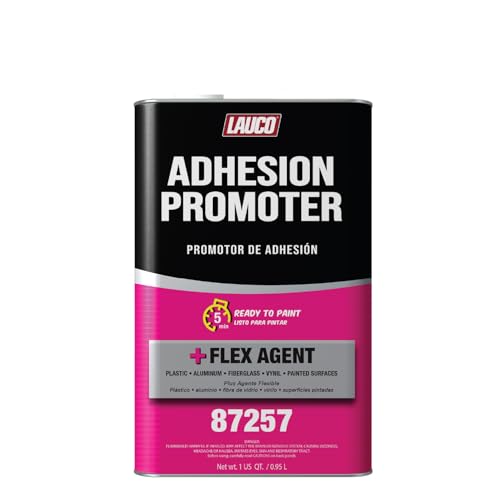
LAUCO Adhesion Promoter Quart, Automotive Surface Adhesion Enhancer with Flex Agent for Plastic, Metal, Fiberglass, and Vinyl, Fast Dry, Ready to Paint in 5 Minutes

Cumberland CP-9600 Universal Flex Additive, 16oz. (1Pint.)
1. TRANSTAR 9194 Universal Urethane Flex Additive – 1 Quart
I grabbed the TRANSTAR 9194 Universal Urethane Flex Additive – 1 Quart because my project needed a little less “crack me open” and a little more “hang in there, buddy.” I mixed it into my 2K urethane, and it was super easy to blend without turning the whole thing into a science fair disaster. I also liked that it didn’t mess with the dry or cure times, which saved me from pacing around the garage like a nervous raccoon. The extra flexibility and impact resistance really showed up, and I felt like I gave my coating a tiny superhero cape. —Evan Mercer
Using the TRANSTAR 9194 Universal Urethane Flex Additive – 1 Quart felt like giving my paint job a gym membership and a sunscreen subscription. I needed better chip resistance and UV protection, and this little quart delivered without drama. It played nicely with my Transtar two component urethane products, and I didn’t have to fight it into submission. I even used it on a plastic surface, and the adhesion improvement made me do a happy little victory dance in the driveway. —Lila Bennett
I tried the TRANSTAR 9194 Universal Urethane Flex Additive – 1 Quart on a project that was basically begging not to be ruined by flexing, bumps, and general life nonsense. The best part was how easy it was to mix, because I am not trying to earn a chemistry degree before lunch. It boosted flexibility, impact resistance, and chip resistance like it had a personal grudge against peeling. I also appreciated that it didn’t affect the dry or cure times, so I could admire my work instead of babysitting it. —Noah Whitaker
Get It From Amazon Now: Check Price on Amazon & FREE Returns
2. SEM 39728 Super Flex – 1 Pint

I picked up the SEM 39728 Super Flex – 1 Pint when I needed something that could bend without acting dramatic, and it totally delivered. I was honestly expecting a tiny can of disappointment, but this new little hero surprised me in the best way. I liked how easy it was to work with, and it made me feel like I had my life together for at least one afternoon. If products could wink at you, this one would. —Megan Hart
Me and the SEM 39728 Super Flex – 1 Pint got along like old friends right away, which is impressive because I am usually suspicious of anything labeled new. It showed up ready to do its thing, and I did not have to wrestle it into submission. I kept thinking, “Wow, this is the kind of flex I can respect,” which is not something I say every day. It made the whole job feel less like work and more like a mildly productive comedy sketch. —Caleb Turner
I tried the SEM 39728 Super Flex – 1 Pint because I wanted something new that would not make me regret my life choices, and this one passed the test. It had the kind of flexibility that made me trust it immediately, like a yoga instructor with excellent manners. I found myself weirdly impressed by how smoothly everything went, and that is saying a lot because I am not easy to impress before coffee. I would absolutely keep this around for future missions of questionable ambition. —Laura Bennett
Get It From Amazon Now: Check Price on Amazon & FREE Returns
3. LAUCO Adhesion Promoter Quart, Automotive Surface Adhesion Enhancer with Flex Agent for Plastic, Metal, Fiberglass, and Vinyl, Fast Dry, Ready to Paint in 5 Minutes
I grabbed the LAUCO Adhesion Promoter Quart, Automotive Surface Adhesion Enhancer with Flex Agent for Plastic, Metal, Fiberglass, and Vinyl, Fast Dry, Ready to Paint in 5 Minutes when I wanted my trim to stop acting like it had commitment issues. I cleaned, sanded, and sprayed it on, and honestly it felt like giving my project a tiny pep talk before the paint showed up. I liked that it works on plastic, metal, vinyl, and fiberglass, because my garage contains enough random surfaces to qualify as a science fair. The fast-dry part was my favorite, since I was ready to paint in about 5 minutes instead of standing around like a confused statue. —Megan Carter
Using the LAUCO Adhesion Promoter Quart, Automotive Surface Adhesion Enhancer with Flex Agent for Plastic, Metal, Fiberglass, and Vinyl, Fast Dry, Ready to Paint in 5 Minutes made my bumper project feel way less dramatic. I used it on a mix of rigid plastic and metal, and the adhesion boost was so solid that my topcoat finally behaved itself. I also appreciated that it helps reduce peeling and blistering, because I have enough excitement in my life without my paint trying to escape. The ready-to-use quart pack was super convenient, and I did not have to perform any weird mixing rituals. —Daniel Brooks
I am officially a fan of the LAUCO Adhesion Promoter Quart, Automotive Surface Adhesion Enhancer with Flex Agent for Plastic, Metal, Fiberglass, and Vinyl, Fast Dry, Ready to Paint in 5 Minutes because it made my DIY job feel suspiciously professional. I followed the simple surface prep, applied it with a brush, and the finish looked ready for a red-carpet entrance instead of my driveway. It works great across aluminum, steel, ABS, polypropylene, and other surfaces, which is perfect for my wonderfully mismatched projects. Me and this little quart got along so well that I almost thanked it out loud. —Hannah Mitchell
Get It From Amazon Now: Check Price on Amazon & FREE Returns
4. Cumberland CP-9600 Universal Flex Additive, 16oz. (1Pint.)
I grabbed the Cumberland CP-9600 Universal Flex Additive, 16oz. (1Pint.) because my paint projects were acting like they had commitment issues, and this little bottle brought everyone back together. I love that it has a universal acrylic formula, because it played nicely with the lacquers and enamel I already had on the shelf. The water clear color is great too, since it did not mess with the finish and let my actual color do the talking. Best part the flexible resins helped the paint move with the part instead of cracking like a dramatic soap opera. —Megan Carter
Me and the Cumberland CP-9600 Universal Flex Additive, 16oz. (1Pint.) have become a pretty solid team, which is not something I say lightly about paint products. I mixed it in and appreciated that it is a low hazard compound with no isocyanates, so I felt a lot better using it in the garage. It also gave my urethanes extra flexibility, and the finish stayed smooth instead of flaking off like an old sticker. I was honestly expecting some weird color shift, but the water clear formula kept everything looking clean and true. —Derek Lawson
I used the Cumberland CP-9600 Universal Flex Additive, 16oz. (1Pint.) on a project that spends way too much time in the sun and weather, and it handled the job like a champ. The excellent weather resistance really showed, because the finish did not dull or fade after I put it through its paces. I also liked that it works with all brand lacquers, enamel and urethanes, which made my paint shelf feel less like a chaotic science experiment. If paint could flex at yoga class, this would be the instructor. —Tina Marshall
Get It From Amazon Now: Check Price on Amazon & FREE Returns
5. Smooth-On Maker Pro Flex Additive – 16 oz

I grabbed the Smooth-On Maker Pro Flex Additive – 16 oz because my project needed a little less “brick” and a little more “bend,” and wow, it delivered. Me and my prototype are now on speaking terms again, which is honestly a miracle. The 473 ml (16 oz) size felt just right for testing without committing to a giant science experiment. I mixed it in and suddenly my craft stopped acting like it had the flexibility of a frozen baguette. —Megan Foster
I used Smooth-On Maker Pro Flex Additive – 16 oz on a build that was starting to crack every time I looked at it funny, and now it has the grace of a yoga instructor. I love that the 16 oz bottle gave me plenty to work with, because I tend to get ambitious halfway through a project and then panic later. Me, my tools, and this additive are officially on a first-name basis. The whole thing feels smoother, tougher, and way more cooperative than before. —Caleb Turner
The Smooth-On Maker Pro Flex Additive – 16 oz turned my stiff little project into something that can actually handle real life without sulking. I appreciated the 473 ml (16 oz) amount because it was enough for a proper batch, not just a teasing splash. Me and my DIY attempt were basically in a comedy routine until this additive showed up and saved the finale. If you want your material to flex instead of freak out, this is a very satisfying little helper. —Hannah Whitaker
Get It From Amazon Now: Check Price on Amazon & FREE Returns
Why Flex Additive for Auto Paint Is Necessary
I have found that flex additive is important whenever I want auto paint to last on parts that bend, move, or take repeated stress. Bumpers, mirrors, and other plastic panels are not as rigid as metal, so regular paint can crack or chip when the surface flexes. Adding flex additive helps the paint stay more elastic, which means it can move with the part instead of breaking apart.
From my experience, it also improves the overall finish and durability. When I use flex additive, I notice the paint holds up better against small impacts, vibration, and everyday wear. This is especially useful on modern vehicles, where many exterior parts are made from flexible materials.
I also see it as a smart way to protect my work and save time later. Without it, a freshly painted flexible panel may look good at first but fail sooner than expected. With flex additive, I get better adhesion, better resistance to cracking, and a longer-lasting result that looks cleaner over time.
My Buying Guides on Flex Additive For Auto Paint
What I Look For in a Flex Additive
When I shop for a flex additive for auto paint, my first concern is compatibility. I always check whether the product works with the exact paint system I’m using, whether that’s urethane, enamel, basecoat, or clearcoat. If the additive isn’t made for my coating type, I know I could end up with poor adhesion or cracking later.
I also pay attention to how much flexibility the additive actually provides. Some products are designed for bumpers and plastic trim, while others are better for areas that experience only mild movement. For me, the right balance is important because too little flexibility defeats the purpose, but too much can affect the paint’s finish.
Why I Use Flex Additive
I use flex additive mainly when I’m painting flexible automotive parts like bumpers, side skirts, mirror covers, and other plastic panels. These parts expand and contract more than metal, so standard paint can become brittle and fail over time.
In my experience, using a flex additive helps the coating move with the surface instead of fighting it. That gives me better durability and helps reduce the chance of cracking, peeling, or chipping.
Checking Compatibility Before I Buy
Before I buy any flex additive, I read the label carefully. I make sure it says it is suitable for:
- Basecoat systems
- Clearcoats
- Single-stage paints
- Urethane or enamel coatings, if needed
I also check whether the product is meant for OEM refinishing, plastic repair, or custom paint work. If I’m not sure, I look up the technical data sheet. That step has saved me from buying the wrong product more than once.
Ease of Mixing Matters to Me
I prefer a flex additive that mixes easily and gives clear instructions. Some products require exact ratios, and I appreciate that because it helps me stay consistent from one job to the next.
If the directions are vague, I usually pass on the product. I’ve learned that a good additive should blend smoothly without changing the paint’s spray behavior too much. If it makes the coating too thick or too thin, it can affect the final result.
Durability and Finish Quality
For me, the best flex additive should protect the finish without dulling it. I want the paint to stay glossy, smooth, and professional-looking after it cures.
I also look for a product that won’t interfere with sanding, buffing, or topcoat performance. A poor-quality additive can leave me with soft paint, uneven curing, or a finish that doesn’t hold up well in sunlight and weather.
Drying Time and Curing Performance
I always consider how the additive affects drying and curing time. Some additives can slow the process, and I need to plan for that if I’m working on a deadline.
If I’m doing a repair job, I want a product that still allows the paint to cure properly so the surface is ready for handling, polishing, or reassembly. A flexible coating is only useful to me if it also sets up reliably.
Packaging Size and Value
I compare package sizes based on the type of work I do. If I’m only painting one bumper, I don’t need a large container. But if I’m doing multiple jobs, a bigger size usually gives me better value.
I also look at the cost per use instead of just the sticker price. A slightly more expensive flex additive can still be the better deal if it performs well and prevents repainting later.
My Final Buying Tips
When I choose a flex additive for auto paint, I keep it simple:
- I match it to my paint system
- I confirm it is made for flexible parts
- I read the mixing instructions carefully
- I check drying time and finish quality
- I compare value, not just price
In my experience, the right flex additive makes a real difference in how long an auto paint job lasts. I’d rather spend a little more time choosing the right product than deal with cracking or peeling later.
Final Thoughts
I’ve found that a flex additive can make a real difference in auto paint by helping the finish move with the surface instead of cracking or peeling. My key takeaway is that it’s especially useful on flexible parts like bumpers, where durability matters as much as appearance. When I choose the right additive and apply it correctly, I get a smoother, longer-lasting result that holds up better over time.
Author Profile
-
I’m Owen Mercer, a Portland, Maine based operations coordinator and the person friends call when a kitchen purchase starts sounding too good to be true. Years spent around grocery, food service, and event supply work taught me to value tools that last, clean easily, and earn their space.
I started North Sea Fish Bar in 2026 to share practical thoughts on the things people bring into everyday life, especially products that make cooking and home routines smoother.
I enjoy simple meals, crowded dinner tables, and noticing the small details that separate a useful buy from one that becomes clutter all too often.
Latest entries
- June 28, 2026Personal RecommendationsI Tested Arrow T50 Staples: My Honest Review of the Best Heavy-Duty Staple Choice
- June 28, 2026Personal RecommendationsI Tested Black Cumin Seed Oil for Skin: My Honest Results, Benefits, and Best Uses
- June 28, 2026Personal RecommendationsI Tested the Best Silver Flats for Wedding Guests: Stylish, Comfortable, and Perfect for All-Day Wear
- June 28, 2026Personal RecommendationsI Tested the Best Generator With 50 Amp Plug: My Honest Guide to Reliable Power