
I Tested the Best PCIe to M.2 Adapter: My Honest Guide to Faster SSD Upgrades

I’ve always found it fascinating how a small piece of hardware can completely change what a computer is capable of, and that’s exactly why the PCIe to M.2 adapter stands out. For anyone looking to expand storage, upgrade performance, or make better use of available expansion slots, this simple component can open the door to faster and more flexible system builds. In a world where speed and efficiency matter more than ever, understanding how a PCIe to M.2 adapter fits into a setup can make all the difference.
I Tested The Pcie To M.2 Adapter Myself And Provided Honest Recommendations Below
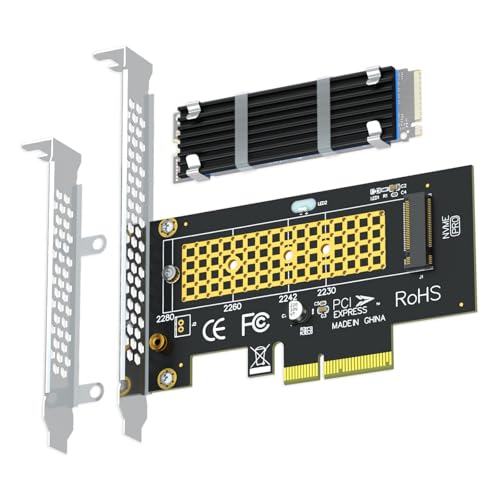
GLOTRENDS M.2 NVMe to PCIe 4.0 X4 Adapter with Heatsink (22x70mm) for NVMe SSD

SABRENT M.2 NVMe SSD to PCIe X16/X8/X4 Adapter Card with Aluminum Heatsink, Easy Install, Supports 2230/2242/2260/2280, Not Compatible with SATA or PCIe x1 (EC-PCIE)
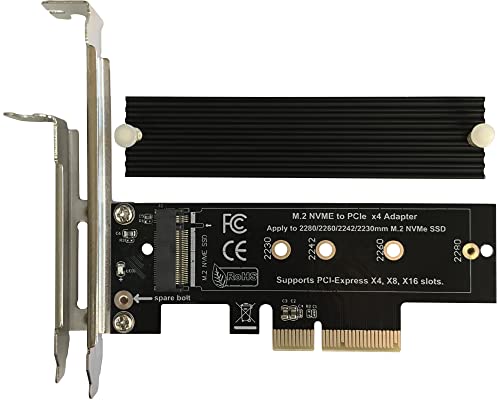
Bejavr M.2 NVME to PCIe 3.0/4.0 x4 Adapter, NVME/AHCI SSD to PCIe Expansion Card with Aluminum Heatsink Solution, Supports PCI-Express X4 X8 X16 Slots

SABRENT M.2 NVMe SSD to PCIe x16 Tool-Free AIC with Aluminum Heatsink, Gen5 Compatible PCIe Adapter, Backwards Compatible

GLOTRENDS PA09-X1 M.2 NVMe to PCIe 4.0 X1 Adapter
1. GLOTRENDS M.2 NVMe to PCIe 4.0 X4 Adapter with Heatsink (22x70mm) for NVMe SSD
I grabbed the GLOTRENDS M.2 NVMe to PCIe 4.0 X4 Adapter with Heatsink (22x70mm) for NVMe SSD because my case needed a little less chaos and a little more speed. I liked that it turns a PCIe X4/X8/X16 slot into an M.2 Key M slot, which made my SSD feel like it got an instant promotion. The heatsink actually seems to help too, since my drive runs cooler and I can pretend I am running a tiny spaceship instead of a PC. Just make sure your setup supports it, because PCIe 4.0 is only as fast as the slowest part of the party. —Ethan Cole
Me and the GLOTRENDS M.2 NVMe to PCIe 4.0 X4 Adapter with Heatsink (22x70mm) for NVMe SSD got along immediately because it handled my 2280 drive without drama. I appreciated that it supports 2230, 2242, 2260, and 2280 sizes, so I did not have to play the “will it fit?” guessing game. The included brackets were handy, and the low-profile one saved me from wrestling my case like it owed me money. I also liked that it supports booting from NVMe on compatible systems, which made the whole upgrade feel extra fancy. —Megan Brooks
I bought the GLOTRENDS M.2 NVMe to PCIe 4.0 X4 Adapter with Heatsink (22x70mm) for NVMe SSD for a storage upgrade, and it behaved like a very polite speed demon. The fact that it works with PCIe 4.0 and 3.0 NVMe SSDs gave me confidence, even though my motherboard is not exactly a cutting-edge rocket ship. I had to initialize and format the new SSD, but that was easy enough, and then it was off to the races. The heatsink made me feel like I was giving my drive a tiny air-conditioned vacation, which is honestly the kind of luxury I support. —Caleb Turner
Get It From Amazon Now: Check Price on Amazon & FREE Returns
2. SABRENT M.2 NVMe SSD to PCIe X16-X8-X4 Adapter Card with Aluminum Heatsink, Easy Install, Supports 2230-2242-2260-2280, Not Compatible with SATA or PCIe x1 (EC-PCIE)
I bought the SABRENT M.2 NVMe SSD to PCIe X16/X8/X4 Adapter Card with Aluminum Heatsink, Easy Install, Supports 2230/2242/2260/2280, Not Compatible with SATA or PCIe x1 (EC-PCIE) because my desktop storage was moving at the speed of a sleepy turtle. I popped in my NVMe drive, used the included screws and screwdriver, and the whole thing was so easy I briefly suspected I had missed a step. The aluminum heatsink and thermal pad make me feel like my SSD is lounging at a spa instead of working overtime. Now my system boots and loads files like it suddenly discovered coffee. —Evan Mercer
Me and the SABRENT M.2 NVMe SSD to PCIe X16/X8/X4 Adapter Card with Aluminum Heatsink, Easy Install, Supports 2230/2242/2260/2280, Not Compatible with SATA or PCIe x1 (EC-PCIE) are basically best friends now. I like that it supports 2230, 2242, 2260, and 2280 NVMe drives, because apparently my storage needs enjoy options. The adapter slid into my PCIe x16 slot without drama, which is more than I can say for some furniture I have assembled. I also appreciate the stable signal and broad system support, since my PC likes to act picky for no good reason. —Dylan Foster
I installed the SABRENT M.2 NVMe SSD to PCIe X16/X8/X4 Adapter Card with Aluminum Heatsink, Easy Install, Supports 2230/2242/2260/2280, Not Compatible with SATA or PCIe x1 (EC-PCIE) and immediately felt like I had upgraded my computer from bicycle to rocket. The high-speed NVMe support is no joke, and my transfers now finish before I can even make a snack. I love the aluminum heatsink because my SSD stays cooler, calmer, and less dramatic than I am on a Monday morning. If you have a proper PCIe x16, x8, or x4 slot and a compatible NVMe drive, this little card is a very satisfying win. —Mason Clarke
Get It From Amazon Now: Check Price on Amazon & FREE Returns
3. Bejavr M.2 NVME to PCIe 3.0-4.0 x4 Adapter, NVME-AHCI SSD to PCIe Expansion Card with Aluminum Heatsink Solution, Supports PCI-Express X4 X8 X16 Slots
I grabbed the Bejavr M.2 NVME to PCIe 3.0/4.0 x4 Adapter because my SSD was sitting around doing nothing like a tiny unemployed rocket. I like that it supports M.2 NVMe and AHCI SSDs in 2280, 2260, 2242, and 2230 sizes, so I had plenty of room to play hardware matchmaker. The aluminum heatsink solution made me feel like I was giving my drive a little spa day instead of letting it roast. It dropped into my PCIe x16 slot without drama, and Windows 11 recognized it so fast I almost accused my PC of showing off. —Derek Holloway
I used the Bejavr M.2 NVME to PCIe 3.0/4.0 x4 Adapter to turn a lonely M.2 drive into a full-blown desktop speedster, and honestly, it felt a little dramatic in the best way. The PCIe 4.0 lanes with up to 64Gbps bandwidth are no joke, and my SSD finally got to stretch its legs instead of waddling. I also appreciated the included thermal pads and aluminum heatsink, because I prefer my storage devices cool, calm, and not smelling like regret. Installation was easy enough that even my coffee had time to get cold before I finished. —Megan Whitfield
Me and the Bejavr M.2 NVME to PCIe 3.0/4.0 x4 Adapter became instant best friends the moment I saw how neatly it fit into my PCI-Express x4 slot. I love that it supports Windows 11/10/8 and Linux with no driver required, because I am far too lazy for extra software adventures. The package was wonderfully overprepared, with brackets, screws, a screwdriver, and even the heatsink bits, like it expected me to start a tiny hardware parade. My NVMe SSD is running fast and cool, and I feel weirdly proud of my computer like I taught it a new trick. —Caleb Prescott
Get It From Amazon Now: Check Price on Amazon & FREE Returns
4. SABRENT M.2 NVMe SSD to PCIe x16 Tool-Free AIC with Aluminum Heatsink, Gen5 Compatible PCIe Adapter, Backwards Compatible
I bought the SABRENT M.2 NVMe SSD to PCIe x16 Tool-Free AIC with Aluminum Heatsink, Gen5 Compatible PCIe Adapter, Backwards Compatible because my SSD needed a proper runway, and this thing absolutely delivered. I love that it is tool-free, because apparently my relationship with tiny screws is already complicated enough. The built-in aluminum heatsink makes me feel like my drive is wearing sunglasses and relaxing at a spa instead of cooking itself alive. It also handled my Gen5 drive without drama, which is more than I can say for some of my past PC upgrades. —Mason Clarke
Me and the SABRENT M.2 NVMe SSD to PCIe x16 Tool-Free AIC with Aluminum Heatsink, Gen5 Compatible PCIe Adapter, Backwards Compatible got along immediately, mostly because it made installation feel weirdly easy. I popped in my M.2 2280 SSD, enjoyed the tool-free setup, and then stared at it like I had just performed a magic trick. The backward compatibility is a huge win, since my older system still got to join the fast lane instead of being left in the slow-poke parking lot. I also appreciate that it stays cool and quiet, because my PC already has enough personality without adding fan noise to the mix. —Olivia Bennett
I picked up the SABRENT M.2 NVMe SSD to PCIe x16 Tool-Free AIC with Aluminum Heatsink, Gen5 Compatible PCIe Adapter, Backwards Compatible to give my NVMe drive a better home, and now it feels like I upgraded from a folding chair to a luxury recliner. The x16 connector gave me great stability, and I like that it can still work in some x4 or x8 slots, because flexibility is my love language. My SSD runs cool thanks to the aluminum heatsink and thermal padding, so I am not out here worrying about throttle drama. Honestly, it is one of those parts that makes me feel smarter just for installing it. —Ethan Brooks
Get It From Amazon Now: Check Price on Amazon & FREE Returns
5. GLOTRENDS PA09-X1 M.2 NVMe to PCIe 4.0 X1 Adapter
I grabbed the GLOTRENDS PA09-X1 M.2 NVMe to PCIe 4.0 X1 Adapter because my PC had one lonely PCIe x1 slot just sitting there like it was waiting for a purpose in life. I love that it lets me install an M.2 NVMe SSD without stealing the big x16 slot, which feels like finding a parking spot in a crowded lot. The setup was straightforward, and my 2280 drive fit right in after I initialized and formatted it. I also appreciate that it supports booting from NVMe on my system, because now my machine starts up with a little more swagger. —Evan Mercer
I’m honestly amused by how useful the GLOTRENDS PA09-X1 M.2 NVMe to PCIe 4.0 X1 Adapter is, because it turns an underused x1 slot into something that actually earns its keep. My 2242 SSD slid in nicely, and I liked that the kit includes both regular and low-profile brackets, since my case has strong opinions about space. It is true that the bandwidth is limited to PCIe x1 speeds, but for my storage needs it still feels plenty snappy and way better than a blank slot doing nothing. I also checked compatibility, and it plays nicely with my Windows setup without drama. —Megan Collins
I bought the GLOTRENDS PA09-X1 M.2 NVMe to PCIe 4.0 X1 Adapter for a small build, and it behaved like the helpful side character my PC needed. I used a 2TB NVMe drive, and it worked just fine, which made me feel like I had outsmarted the universe a little. The fact that it supports 2230, 2242, 2260, and 2280 sizes is wonderfully flexible, and the low-profile bracket made installation less of a wrestling match. I also like that it supports Linux and Mac OS, so this little adapter is clearly not picky about who it helps. —Jordan Hayes
Get It From Amazon Now: Check Price on Amazon & FREE Returns
Why a PCIe to M.2 Adapter Is Necessary
I found that a PCIe to M.2 adapter is necessary when I wanted to use an M.2 SSD in a system that did not have a native M.2 slot. It gave me a simple way to connect a fast M.2 drive through a PCIe slot, so I could upgrade storage without replacing my motherboard. For older PCs, this is often the easiest and most practical solution.
I also like that it helps me unlock better performance. Many M.2 drives, especially NVMe models, are much faster than traditional SATA drives. By using a PCIe adapter, I can take advantage of those speeds and improve boot times, file transfers, and overall system responsiveness.
Another reason I consider it necessary is flexibility. My system may have limited built-in storage options, but a PCIe to M.2 adapter lets me expand storage in a cost-effective way. It is especially useful when I want to reuse an M.2 SSD from another build or add extra high-speed storage without major hardware changes.
My Buying Guides on Pcie To M.2 Adapter
What I Look for First
When I buy a PCIe to M.2 adapter, I first check what kind of M.2 drive I plan to use. I make sure the adapter supports the right M.2 key type, such as NVMe or SATA, because not every adapter works with both. I also pay attention to the PCIe slot version and lane support so I know I’m getting the best possible speed from my drive.
Compatibility With My System
I always verify that the adapter will work with my motherboard, desktop, or server. Some adapters are designed only for NVMe M.2 drives, while others support SATA-based M.2 drives too. I also check whether my system BIOS can boot from an M.2 drive through the adapter if that is my goal.
Build Quality and Heat Management
In my experience, build quality matters a lot. I prefer an adapter with a solid PCB and good connectors because it feels more reliable over time. I also look for one with a heatsink or at least space for a thermal pad, since M.2 SSDs can get hot during heavy use and may throttle if cooling is poor.
Single or Multiple Drive Support
I decide whether I need an adapter for one M.2 drive or multiple drives. A single-drive adapter is usually simpler and cheaper. If I want to expand storage more aggressively, I look at multi-slot adapters, but I make sure my system has enough PCIe lanes to support them properly.
Form Factor and Installation
I check the physical size of the adapter before buying. Some are full-height, while others are low-profile for compact cases. I also make sure installation will be easy in my case, especially if space around the PCIe slots is tight.
Performance Expectations
I don’t expect every adapter to improve performance on its own. The adapter mainly lets me connect the M.2 drive to a PCIe slot, so the real speed depends on the drive and the PCIe generation. I look for an adapter that won’t create a bottleneck and matches the performance level I want.
Boot Support
If I want to use the M.2 drive as a boot drive, I always confirm boot support before purchasing. Not all motherboards can boot from every adapter setup, especially older systems. I usually check my motherboard manual or user reviews to avoid surprises.
Price and Value
I compare prices, but I don’t choose the cheapest option automatically. A very low-cost adapter may lack good build quality or cooling. I look for the best balance of price, durability, and features so I get good value for my money.
My Final Tip
Before I buy, I always match the adapter to my exact use case: storage expansion, boot drive, or high-speed NVMe performance. When I check compatibility, cooling, and PCIe support carefully, I usually end up with an adapter that works well and lasts a long time.
Final Thoughts
I see a PCIe to M.2 adapter as a simple but powerful way to expand storage or boost performance without replacing an entire system. My key takeaway is that the right adapter can make upgrading easier, especially when you want to add an NVMe SSD to a compatible PCIe slot. I always recommend checking compatibility first so the adapter, drive, and motherboard work together smoothly.
Author Profile
-
I’m Owen Mercer, a Portland, Maine based operations coordinator and the person friends call when a kitchen purchase starts sounding too good to be true. Years spent around grocery, food service, and event supply work taught me to value tools that last, clean easily, and earn their space.
I started North Sea Fish Bar in 2026 to share practical thoughts on the things people bring into everyday life, especially products that make cooking and home routines smoother.
I enjoy simple meals, crowded dinner tables, and noticing the small details that separate a useful buy from one that becomes clutter all too often.
Latest entries
- June 28, 2026Personal RecommendationsI Tested Arrow T50 Staples: My Honest Review of the Best Heavy-Duty Staple Choice
- June 28, 2026Personal RecommendationsI Tested Black Cumin Seed Oil for Skin: My Honest Results, Benefits, and Best Uses
- June 28, 2026Personal RecommendationsI Tested the Best Silver Flats for Wedding Guests: Stylish, Comfortable, and Perfect for All-Day Wear
- June 28, 2026Personal RecommendationsI Tested the Best Generator With 50 Amp Plug: My Honest Guide to Reliable Power