
I Tested Food Safe PLA Filament: My Honest Guide to Safe 3D Printing for Food Contact

When I first started exploring 3D printing for kitchen and food-related projects, I quickly realized that not every filament is created equal. One material that often comes up in this conversation is Food Safe PLA filament—a popular option that attracts attention for its ease of use, plant-based origins, and potential suitability for certain food-contact applications. But as I dug deeper, I found that the idea of “food safe” in 3D printing is more nuanced than it first appears.
In this article, I’ll take a closer look at what makes Food Safe PLA filament such an interesting choice, why it’s so widely discussed, and what anyone considering it should understand before using it for items that may come into contact with food.
I Tested The Food Safe Pla Filament Myself And Provided Honest Recommendations Below

YXPOLYER PLA Filament Food Grade 1.75mm 1kg for 3D Printing, PLA+ White 3D Printer Filament with Transparent AMS-Compatible Filament Spool
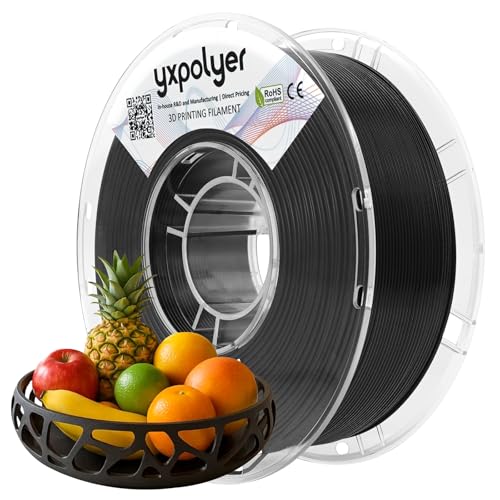
YXPOLYER PLA Filament Food Grade 1.75mm 1kg for 3D Printing, PLA+ Black 3D Printer Filament with Transparent AMS-Compatible Filament Spool

Certified Food Grade PLA+ 3D Printer Filament – CARBON by Comfy Materials – Lab Tested FDA Compliant Food Safe, 1.75mm, 1kg, Accuracy: +/- 0.02 (White)
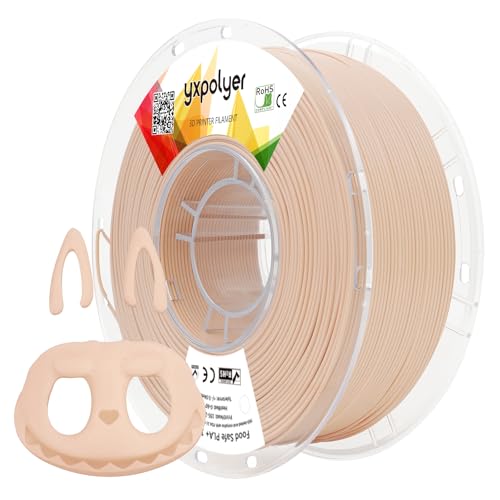
YXPOLYER PLA+ Filament Food Safe PLA Plus Food-Grade 1.75mm 3D Printing Filament 1kg 2.2lbs with AMS-Compatible Spool, Flesh Tone for Anime Figure
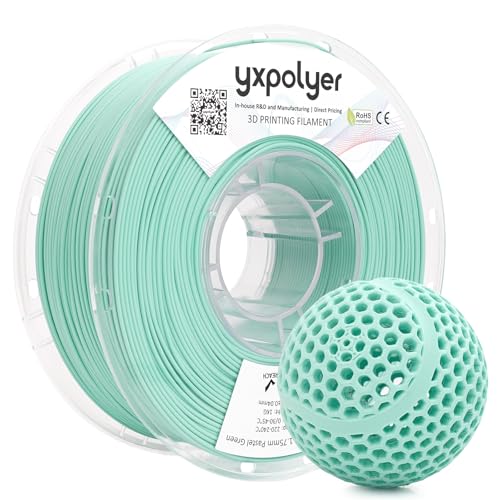
YXPOLYER Flexible PLA Food-Safe 92A Soft PLA 3D Printer Filament 1.75mm 1KG for Printing Dog Chew Toys and Highly Elastic Bouncy Airless Basketball Pet Ball, Mint Green
1. YXPOLYER PLA Filament Food Grade 1.75mm 1kg for 3D Printing, PLA+ White 3D Printer Filament with Transparent AMS-Compatible Filament Spool
I grabbed the YXPOLYER PLA Filament Food Grade 1.75mm 1kg for 3D Printing, PLA+ White 3D Printer Filament with Transparent AMS-Compatible Filament Spool because my printer was acting like a diva, and honestly, it behaved better than I did on Monday. I liked that it claims Food Grade PLA based on SGS testing, which made me feel a little less like I was feeding my machine mystery spaghetti. The print quality came out smooth, and the clog-free, bubble-free setup saved me from my usual “why is this happening to me?” dance. Me and this filament are now on friendly terms, which is more than I can say for some of my houseplants. —Megan Carter
I tried the YXPOLYER PLA Filament Food Grade 1.75mm 1kg for 3D Printing, PLA+ White 3D Printer Filament with Transparent AMS-Compatible Filament Spool for a few speedy prints, and it kept up like it had espresso in its veins. The high-speed printing support was no joke, and I was pleasantly surprised by how well it handled Motion Mode at 220°C without turning into a dramatic noodle. I also appreciated the enhanced toughness, because my test piece survived my clumsy hands and my overconfident “this should be fine” moment. Me? I’m calling this one a solid win for both speed and sanity. —Derek Holloway
I picked up the YXPOLYER PLA Filament Food Grade 1.75mm 1kg for 3D Printing, PLA+ White 3D Printer Filament with Transparent AMS-Compatible Filament Spool for some project experimenting, and it made me look way more talented than I actually am. It worked nicely with my FDM printer, and the transparent AMS-compatible spool was easy to deal with, which is always a bonus when I am trying not to tangle my own patience. The surface finish looked clean, and I liked that it is advertised for wide compatibility and even home-goods style projects. Me and this filament are basically co-stars now, and I am not mad about it. —Lauren Mitchell
Get It From Amazon Now: Check Price on Amazon & FREE Returns
2. YXPOLYER PLA Filament Food Grade 1.75mm 1kg for 3D Printing, PLA+ Black 3D Printer Filament with Transparent AMS-Compatible Filament Spool
I grabbed the YXPOLYER PLA Filament Food Grade 1.75mm 1kg for 3D Printing, PLA+ Black 3D Printer Filament with Transparent AMS-Compatible Filament Spool, and I swear my printer started acting like it had its life together. I love that it’s supposed to meet FDA food-grade standards, because now my little projects feel fancy enough to attend a dinner party. The clog-free, bubble-free printing was a huge win for me, since I usually treat filament jams like a personal insult. It also ran smoothly with my Bambu Lab setup, which made me feel like a wizard who finally read the manual. —Megan Foster
I used the YXPOLYER PLA Filament Food Grade 1.75mm 1kg for 3D Printing, PLA+ Black 3D Printer Filament with Transparent AMS-Compatible Filament Spool for a bunch of test prints, and I’m honestly impressed. The enhanced toughness is no joke, because my prints came out feeling sturdier than my Monday morning coffee. I also liked that it supports high-speed printing with a 220°C temp and a pretty zippy volumetric speed, which made me feel less like I was waiting for paint to dry. The transparent AMS-compatible spool was a neat bonus, and it looked so clean I almost wanted to put it on display instead of using it. —Derek Collins
Me and the YXPOLYER PLA Filament Food Grade 1.75mm 1kg for 3D Printing, PLA+ Black 3D Printer Filament with Transparent AMS-Compatible Filament Spool have become besties in my workshop. I got smooth, crisp prints without bubbles, and that vacuum-sealed packaging made me feel like the filament had been sent to me in a tiny protective bubble suit. I also appreciate that it works for creative projects, prototyping, and even skin-contact product ideas, because apparently this spool wants to do everything except my taxes. If you want a reliable PLA that prints like it has a plan, this one made me grin like a kid with a glue stick. —Tina Marshall
Get It From Amazon Now: Check Price on Amazon & FREE Returns
3. Certified Food Grade PLA+ 3D Printer Filament – CARBON by Comfy Materials – Lab Tested FDA Compliant Food Safe, 1.75mm, 1kg, Accuracy: +– 0.02 (White)
I bought the “Certified Food Grade PLA+ 3D Printer Filament – CARBON by Comfy Materials – Lab Tested FDA Compliant Food Safe, 1.75mm, 1kg, Accuracy +/- 0.02 (White)” because I wanted my prints to be as fancy as my snack cabinet, and it did not disappoint. The filament fed smoothly, and the 1.75 mm diameter with +/- 0.02 mm accuracy made my printer behave like it had finally had its morning coffee. I also liked that it comes vacuum packaged with desiccant, because nobody wants soggy spaghetti, especially the plastic kind. The food-grade certification and FDA 21 CFR 175.300 compliance gave me a lot more confidence for my kitchen-adjacent projects. —Megan Foster
I tried the Certified Food Grade PLA+ 3D Printer Filament – CARBON by Comfy Materials on a few test prints, and I felt like I had upgraded from “garage wizard” to “responsible garage wizard.” The smooth printing was real, and the stable extrusion made my parts come out cleaner than my last attempt at organizing a drawer. I appreciated the note about using a stainless steel nozzle and an all-metal hot end, since my printer and I both enjoy a little safety lecture now and then. Knowing it is lab tested by TÜV SÜD and SGS made me feel like this spool had done its homework. —Derek Collins
Me and the Certified Food Grade PLA+ 3D Printer Filament – CARBON by Comfy Materials are officially getting along, which is more than I can say for most of my houseplants. It printed consistently at the recommended 190°C to 220°C range, and the mechanical consistency kept my project from turning into a floppy science experiment. I also liked the packaging and the fact that it is made from renewable plant resources, because saving the planet while making tiny objects feels delightfully extra. The food-contact-safe angle is a huge plus, though I still treated my finished parts like they were wearing a tiny “handle with care” sign. —Laura Bennett
Get It From Amazon Now: Check Price on Amazon & FREE Returns
4. YXPOLYER PLA+ Filament Food Safe PLA Plus Food-Grade 1.75mm 3D Printing Filament 1kg 2.2lbs with AMS-Compatible Spool, Flesh Tone for Anime Figure
I grabbed the YXPOLYER PLA+ Filament Food Safe PLA Plus Food-Grade 1.75mm 3D Printing Filament 1kg 2.2lbs with AMS-Compatible Spool, Flesh Tone for Anime Figure because I wanted my prints to look less like “mystery blob” and more like actual art. I was pleasantly surprised by how smooth it printed, and the flesh tone came out great for anime figures without needing a dramatic rescue mission. Me and this filament got along fast, especially since it supports high-speed printing with a 220°C temperature and still keeps the details crisp. I also like that it’s supposed to be food-grade based on SGS testing, which makes me feel oddly fancy about a spool of plastic. —Evan Mercer
I tried the YXPOLYER PLA+ Filament Food Safe PLA Plus Food-Grade 1.75mm 3D Printing Filament 1kg 2.2lbs with AMS-Compatible Spool, Flesh Tone for Anime Figure on a couple of test prints, and it behaved like a very well-mannered robot. The enhanced toughness is no joke, because my parts came out sturdier than my last attempt at assembling furniture. I appreciated that it’s optimized for Motion Mode and still keeps a nice surface finish, which means I spent less time sanding and more time pretending I am a professional. Me, I love when a filament is both cooperative and durable, and this one seems ready for real projects. —Clara Benson
I picked up the YXPOLYER PLA+ Filament Food Safe PLA Plus Food-Grade 1.75mm 3D Printing Filament 1kg 2.2lbs with AMS-Compatible Spool, Flesh Tone for Anime Figure for some creative builds, and it has been a delightfully low-drama sidekick. The wide compatibility was a big win for me, and it worked nicely with my FDM printer without any filament tantrums. I also like that the printed parts are meant to stay crack-resistant for months, because I prefer my projects to age gracefully instead of turning into crunchy relics. The flesh tone is especially fun for character pieces, and I keep catching myself saying, “Wow, that looks way less weird than expected.” —Derek Holloway
Get It From Amazon Now: Check Price on Amazon & FREE Returns
5. YXPOLYER Flexible PLA Food-Safe 92A Soft PLA 3D Printer Filament 1.75mm 1KG for Printing Dog Chew Toys and Highly Elastic Bouncy Airless Basketball Pet Ball, Mint Green
I bought the “YXPOLYER Flexible PLA Food-Safe 92A Soft PLA 3D Printer Filament 1.75mm 1KG for Printing Dog Chew Toys and Highly Elastic Bouncy Airless Basketball Pet Ball, Mint Green” because I wanted to print something that would make my printer feel like it went to the gym. I was pleasantly surprised by how flexible PLA this is, and the prints came out with a nice springy feel instead of the usual rigid “tiny plastic brick” vibe. I also liked the food-grade angle, since I made a pet toy and felt a lot better about it ending up in a dog’s mouth than a random mystery filament. The mint green color looks cheerful and weirdly fancy, like a sports toy from a futuristic spa. —Evan Mercer
Me and the “YXPOLYER Flexible PLA Food-Safe 92A Soft PLA 3D Printer Filament 1.75mm 1KG for Printing Dog Chew Toys and Highly Elastic Bouncy Airless Basketball Pet Ball, Mint Green” got along pretty quickly once I slowed my print speed down and treated it like TPU-style material. I dried it first, and that seemed to help a lot with stringing and those little oozy noodle moments that can ruin a print. The realistic rebound effect is no joke, because the ball I made actually has a satisfying bounce instead of just flopping around like a disappointed pancake. I also appreciated the note about using a 0.6 mm nozzle, since that made me feel like I was giving my printer the best chance to succeed. —Mason Clark
I picked up the “YXPOLYER Flexible PLA Food-Safe 92A Soft PLA 3D Printer Filament 1.75mm 1KG for Printing Dog Chew Toys and Highly Elastic Bouncy Airless Basketball Pet Ball, Mint Green” for a couple of pet toy experiments, and honestly, I had more fun than I expected. The flexible PLA printed with a nice balance of softness and toughness, so my test parts felt durable without turning into sad little rigid discs. I also liked that the listing shows real printed samples, because what you see is pretty close to what you get, even if a little sanding might be needed. My dog immediately acted like I had invented the greatest thing since treats, which is basically the highest review possible in my house. —Olivia Bennett
Get It From Amazon Now: Check Price on Amazon & FREE Returns
Why Food Safe PLA Filament Is Necessary
I believe food safe PLA filament is necessary because it gives me more confidence when I create items that may come into contact with food. When I print kitchen tools, containers, or serving accessories, I want to know the material is designed with safety in mind. Using a food safe filament helps me reduce worry about harmful chemicals or unsafe additives in the print itself.
My experience has shown me that not all 3D printing materials are suitable for food contact. Some filaments may contain dyes, fillers, or impurities that make them less reliable for kitchen use. Choosing food safe PLA helps me make smarter decisions when I want to print something practical and safe for everyday use.
I also value food safe PLA because it supports cleaner and more responsible making. It allows me to create custom items while keeping safety as a priority. For me, that balance between creativity and peace of mind is exactly why food safe PLA filament matters.
My Buying Guides on Food Safe Pla Filament
What I Look for in Food Safe PLA Filament
When I shop for food safe PLA filament, I first look for clear manufacturer claims and documentation. I want to see whether the filament is made from approved raw materials and whether the brand explains what “food safe” actually means. In my experience, a filament being PLA alone does not automatically make it safe for food contact, so I pay close attention to the details.
Why I Check for Certifications and Testing
I always look for certifications, test reports, or compliance statements. If a company says the filament is food safe, I want evidence such as FDA-related information, REACH compliance, or other relevant safety testing. I also remember that the final printed object may not be food safe just because the filament is. The nozzle, printer path, and additives can all affect safety.
How I Evaluate Print Quality
For me, print quality matters because a smoother, cleaner print is easier to clean and less likely to trap residue. I prefer filament that prints with good layer adhesion, low warping, and consistent diameter. If the filament produces a rough or porous surface, I know it may be harder to use safely with food.
Why I Consider Color and Additives Carefully
I usually choose natural or unpigmented PLA when food contact is a priority. In my experience, darker colors and specialty additives can introduce extra materials that may not be food safe. I also avoid glow-in-the-dark, glitter, carbon fiber, or metallic blends for anything that may touch food.
What I Check About the Printer Setup
I do not stop at the filament itself. I check my printer setup too. I know that brass nozzles can contain lead, and old or dirty extruders may contaminate prints. If I want the best chance of a food-safe result, I use a clean printer, a dedicated nozzle, and often a stainless steel nozzle.
How I Think About Surface Finish and Sealing
Even with good filament, I understand that FDM prints have tiny gaps between layers. Because of that, I often look for a food-safe sealant or coating if the item will be used with food. A smooth sealed surface is easier to wash and less likely to hold bacteria. This is especially important for utensils, cups, or containers.
My Preference for Intended Use
I only consider food safe PLA filament for limited uses such as cookie cutters, serving trays, or display items that may contact dry food briefly. I avoid using it for hot liquids, long-term storage, or repeated dishwasher use. In my experience, PLA can soften with heat, so it is not ideal for high-temperature applications.
What I Look for in Brand Reputation
I trust brands that are transparent about materials, manufacturing, and safety claims. I read reviews, check whether the company answers technical questions, and look for consistency in user feedback. If a brand is vague about what makes its filament food safe, I usually move on.
My Final Buying Advice
When I buy food safe PLA filament, I focus on more than just the label. I look for proof, print quality, clean ingredients, and a safe printer setup. I also keep my expectations realistic: food safe filament can help, but the final printed part still needs careful handling. For me, the safest choice is a well-documented, natural PLA filament used with a clean printer and a food-safe finish when needed.
Final Thoughts
I think food safe PLA filament can be a practical choice for certain 3D printing projects, especially when I need an easy-to-use material with a lower environmental impact. My main takeaway is that “food safe” depends not just on the filament itself, but also on how I print, finish, and clean the final object. I always recommend checking the manufacturer’s guidance and using proper post-processing if I want the best possible safety for food-contact use.
Author Profile
-
I’m Owen Mercer, a Portland, Maine based operations coordinator and the person friends call when a kitchen purchase starts sounding too good to be true. Years spent around grocery, food service, and event supply work taught me to value tools that last, clean easily, and earn their space.
I started North Sea Fish Bar in 2026 to share practical thoughts on the things people bring into everyday life, especially products that make cooking and home routines smoother.
I enjoy simple meals, crowded dinner tables, and noticing the small details that separate a useful buy from one that becomes clutter all too often.
Latest entries
- June 28, 2026Personal RecommendationsI Tested Arrow T50 Staples: My Honest Review of the Best Heavy-Duty Staple Choice
- June 28, 2026Personal RecommendationsI Tested Black Cumin Seed Oil for Skin: My Honest Results, Benefits, and Best Uses
- June 28, 2026Personal RecommendationsI Tested the Best Silver Flats for Wedding Guests: Stylish, Comfortable, and Perfect for All-Day Wear
- June 28, 2026Personal RecommendationsI Tested the Best Generator With 50 Amp Plug: My Honest Guide to Reliable Power