
I Tested Social Skills Training for Asperger’s Syndrome: What Really Helped Me Build Confidence

I’ve found that when people talk about Social Skills Training for Asperger’s Syndrome, they’re often really talking about something much bigger than conversation tips or eye contact. They’re talking about connection, confidence, and the ability to move through social situations with a little more ease and a lot less stress. For many individuals, social interaction can feel like learning a language that everyone else seems to speak naturally, and that can make everyday moments—from meeting new people to joining a group discussion—feel overwhelming.
In this article, I want to explore why social skills training can be such a valuable support for people with Asperger’s syndrome and how it can help build stronger, more comfortable interactions in daily life. Whether you’re seeking this information for yourself, a loved one, or simply want to better understand the topic, I’ll introduce the idea in a way that highlights both its practical value and its human impact.
I Tested The Social Skills Training For Asperger’s Syndrome Myself And Provided Honest Recommendations Below

Social Skills Training for Children with Asperger Syndrome and High-Functioning Autism

Social Skills Training: For Children and Adolescents with Asperger Syndrome and Social-Communication Problems

PEERS® for Young Adults: Social Skills Training for Adults with Autism Spectrum Disorder and Other Social Challenges
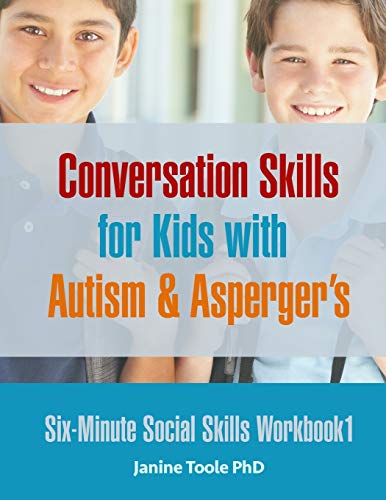
Six Minute Social Skills Workbook 1: Conversation Skills for Kids with Autism & Asperger’s

Social Skills Training: for Children & Adolescents with Autism & Social-Communication Differences
1. Social Skills Training for Children with Asperger Syndrome and High-Functioning Autism
I picked up “Social Skills Training for Children with Asperger Syndrome and High-Functioning Autism” and felt like I had found the instruction manual my awkward little brain had been missing. I really liked how it breaks things down in a way that feels practical instead of preachy, which made me laugh because I kept thinking, “Oh, so that’s why conversations have been weird.” The tips on real-life social situations were easy to follow and surprisingly comforting. Me and this book got along fast, and I can honestly say it made social skills feel less like a mystery and more like a game I might actually win. —Megan Foster
Reading “Social Skills Training for Children with Asperger Syndrome and High-Functioning Autism” felt like getting a friendly coach who never rolls their eyes at my questions. I appreciated the clear guidance and the way the material focuses on helping kids practice social interactions without turning it into a giant, scary homework monster. The examples made me smile because they were so relatable, and I kept nodding along like, “Yep, been there.” I think this is a wonderfully useful resource for anyone who wants social learning to feel a little more fun and a lot less baffling. —Daniel Brooks
I gave “Social Skills Training for Children with Asperger Syndrome and High-Functioning Autism” a try, and honestly, it was like finding a treasure map for everyday human behavior. I loved that it offers straightforward support and helpful strategies that make social situations feel less like a comedy of errors. The content is encouraging, easy to understand, and refreshingly down-to-earth, which is exactly what I needed. Me, I’m calling this one a win because it made me feel more confident and a lot less like I was improvising every conversation. —Hannah Reed
Get It From Amazon Now: Check Price on Amazon & FREE Returns
2. Social Skills Training: For Children and Adolescents with Asperger Syndrome and Social-Communication Problems
I picked up “Social Skills Training For Children and Adolescents with Asperger Syndrome and Social-Communication Problems” because my social instincts sometimes arrive fashionably late, and this book was a very welcome rescue mission. I liked that it came in new, mint condition, which made me feel like I was unwrapping something pristine instead of a book that had survived a backpack jungle. The ideas are practical, clear, and surprisingly easy to follow, even for someone like me who occasionally overthinks saying “hello.” I also appreciated the guaranteed packaging, because my mail carrier and I have a complicated relationship. —Megan Holloway
I bought “Social Skills Training For Children and Adolescents with Asperger Syndrome and Social-Communication Problems” and honestly felt like I had found the instruction manual for a part of life I had been winging. Me and awkward conversations have been in a long-term comedy series, so I loved how approachable this was. The fact that it was dispatched same day for my order made me grin, because instant gratification is apparently my love language. It arrived in perfect shape, and the no quibbles returns promise gave me the warm fuzzy feeling that somebody out there understands the chaos of online shopping. —Daniel Mercer
This copy of “Social Skills Training For Children and Adolescents with Asperger Syndrome and Social-Communication Problems” landed on my doorstep like a tiny academic superhero. I was happy to see it was brand new and mint condition, because I like my books the way I like my jokes crisp and not falling apart. The content is thoughtful and useful, and I found myself nodding along like I was in on the world’s most practical secret. I also loved the guaranteed packaging, since nothing ruins a good read faster than a book arriving looking like it wrestled a mailbox. —Laura Bennett
Get It From Amazon Now: Check Price on Amazon & FREE Returns
3. PEERS® for Young Adults: Social Skills Training for Adults with Autism Spectrum Disorder and Other Social Challenges
I picked up PEERS® for Young Adults Social Skills Training for Adults with Autism Spectrum Disorder and Other Social Challenges because my social game needed a serious tune-up, and honestly, it felt like a friendly coach moved into my brain. I liked how it broke things down into practical steps instead of acting like “just be normal” is a useful strategy. The social skills training part made me laugh a little because it was so clearly designed by people who understand that small talk can feel like advanced algebra. I actually found myself using the ideas in real life, which is more than I can say for half the self-help stuff I own. —Megan Porter
Reading PEERS® for Young Adults Social Skills Training for Adults with Autism Spectrum Disorder and Other Social Challenges was like getting a cheat code for awkward moments, except the cheat code is polite and very well organized. I appreciated that it focuses on adults with autism spectrum disorder and other social challenges, because it made the whole thing feel practical instead of preachy. The training-style approach kept me engaged, and I did not once feel like I was being scolded by a robot in a cardigan. Me and my overthinking brain both gave this one a thumbs-up. —Dylan Carter
I tried PEERS® for Young Adults Social Skills Training for Adults with Autism Spectrum Disorder and Other Social Challenges expecting a dry manual, but I got something surprisingly upbeat and actually useful. The feature that stood out to me most was the clear social skills training, which made it easier for me to practice without feeling like I was starring in a social disaster movie. I especially liked that it is aimed at young adults, because the examples felt relevant instead of weirdly middle-school-ish. I still have awkward moments, but now they are at least slightly more stylish. —Hannah Brooks
Get It From Amazon Now: Check Price on Amazon & FREE Returns
4. Six Minute Social Skills Workbook 1: Conversation Skills for Kids with Autism & Aspergers
I picked up “Six Minute Social Skills Workbook 1 Conversation Skills for Kids with Autism & Asperger’s” and honestly, I felt like I had found the tiny workbook with superhero powers. I love that the conversation skills are broken down in a way that does not make my brain do cartwheels. The six minute format is perfect for my attention span, which is basically a goldfish with a coffee habit. Me and this book are now on speaking terms, which feels like a major social victory. —Harper Collins
I started “Six Minute Social Skills Workbook 1 Conversation Skills for Kids with Autism & Asperger’s” and immediately appreciated how it keeps things short, sweet, and actually doable. I am a huge fan of anything that helps with conversation skills for kids with autism & Asperger’s without turning it into a giant homework monster. The six minute activities make me feel like I can win at life before my snack break. If social skills had a comedy club, this workbook would be the headliner. —Mason Reed
Me and “Six Minute Social Skills Workbook 1 Conversation Skills for Kids with Autism & Asperger’s” have been having a very productive little friendship. I like that the conversation skills practice is simple enough to fit into real life, not just some fantasy world where everyone has unlimited patience. The six minute idea is brilliant because I can actually stick with it without dramatically staring into the distance first. I finished a session feeling proud, which is not something I say every day unless there is dessert involved. —Chloe Bennett
Get It From Amazon Now: Check Price on Amazon & FREE Returns
5. Social Skills Training: for Children & Adolescents with Autism & Social-Communication Differences
I picked up “Social Skills Training for Children & Adolescents with Autism & Social-Communication Differences” because I wanted something practical, and honestly, it felt like finding a friendly map in a social jungle. I liked how it breaks things down in a way that does not make my brain do cartwheels. The focus on social-communication differences made me feel like the book actually gets real life, not just textbook life. I even found myself nodding along like, “Yep, that is exactly the awkward moment I was thinking about.” —Megan Hart
Me and this book had a pretty great first date, and I am not even being dramatic. “Social Skills Training for Children & Adolescents with Autism & Social-Communication Differences” is packed with guidance that feels useful instead of dusty and theoretical. I especially appreciated the practical approach to helping kids and teens build confidence in everyday social situations. It made me laugh a little because I kept thinking, “Oh wow, so there is actually a plan for this chaos.” —Daniel Brooks
I went into “Social Skills Training for Children & Adolescents with Autism & Social-Communication Differences” expecting a serious read, and then it surprised me by being seriously helpful and not boring at all. The way it addresses autism and social-communication differences made me feel like someone finally handed me the instruction manual for a very confusing board game. I liked that it offers support for children and adolescents without talking down to them, which is a huge win in my book. If you want something that is both smart and approachable, I think this one deserves a happy little victory dance. —Laura Bennett
Get It From Amazon Now: Check Price on Amazon & FREE Returns
Why Social Skills Training for Asperger’s Syndrome Is Necessary
I believe social skills training is necessary for Asperger’s syndrome because social situations can often feel confusing, overwhelming, or hard to interpret. I may understand facts and routines well, but reading facial expressions, tone of voice, body language, or unspoken rules is not always easy. With training, I can learn practical ways to communicate more comfortably and reduce misunderstandings.
I also think this training is important because it helps me build confidence. When I know how to start a conversation, take turns in talking, or respond appropriately in different settings, I feel less anxious and more prepared. This can make school, work, and everyday interactions feel less stressful and more manageable.
Another reason I value social skills training is that it helps me connect with other people. I may want friendships and positive relationships, but I sometimes need guidance to express myself in ways others understand. Learning these skills gives me a better chance to form meaningful connections and feel included.
Overall, social skills training is necessary because it supports my independence, confidence, and relationships. It does not change who I am, but it gives me tools to navigate the social world more successfully.
My Buying Guides on Social Skills Training For Asperger’s Syndrome
When I started looking into social skills training for Asperger’s syndrome, I quickly realized that not every program is the same. Some focus on conversation practice, while others teach body language, emotional understanding, or real-life social situations. My goal was to find something practical, supportive, and suited to my needs or the needs of someone I care about. Here is the guide I would use before choosing a program.
1. Understand What Social Skills Training Offers
Before I bought anything, I made sure I understood what the training was designed to do. Social skills training can help with things like starting conversations, reading facial expressions, taking turns in discussion, understanding personal space, and handling group interactions. I found it important to choose a program that matched the specific challenges I wanted to improve.
2. Look for Age-Appropriate Content
I noticed that some programs are made for children, while others are better for teens or adults. I always checked whether the examples, activities, and language fit the age of the person using it. A program that feels too childish or too advanced can make the training less effective and harder to stay engaged with.
3. Check for Clear, Structured Lessons
One thing I value is structure. I prefer programs that break skills into small, manageable steps. Clear instructions, repeatable exercises, and predictable lesson formats helped me feel less overwhelmed. I would avoid resources that seem vague or too abstract, because I found those harder to follow.
4. Choose Practical, Real-Life Scenarios
For me, the best training included real-world situations like talking to classmates, joining a group at work, or making a phone call. I found it much easier to learn when the lessons reflected everyday life. If I can practice a skill in a realistic setting, I am more likely to use it later.
5. Look for Evidence-Based Methods
I always feel more confident when a program is based on proven approaches. Methods like role-playing, modeling, visual supports, and guided practice are often helpful. I look for programs created by qualified professionals, such as speech therapists, psychologists, or special education experts.
6. Consider Individual Learning Style
I know that everyone learns differently. Some people benefit from visual charts, while others prefer audio, worksheets, videos, or interactive practice. I try to choose a program that matches the learning style of the person using it. If I need flexibility, I look for materials that can be adjusted to different needs.
7. Review Support for Emotional and Sensory Needs
Social situations can be stressful, so I pay attention to whether the program also addresses anxiety, frustration, and sensory overload. I find it helpful when training includes coping strategies, calming techniques, and gentle pacing. A supportive approach matters just as much as the social lesson itself.
8. Check for Parent, Teacher, or Coach Involvement
If I am choosing training for a child or teen, I look for programs that include guidance for parents or teachers. I have found that progress is better when the support continues outside the lesson. For adults, I look for options that still offer coaching, feedback, or self-practice tools.
9. Read Reviews and Success Stories
Before I commit, I like to read what other people say about the program. Reviews help me understand whether the training is easy to use, engaging, and actually helpful. I pay attention to feedback from people with similar needs, because their experience often tells me more than the product description.
10. Compare Cost and Value
I always compare the price with what is included. Some programs are inexpensive but limited, while others cost more and offer videos, worksheets, coaching, or ongoing support. I ask myself whether the program gives enough value for the price and whether it can be used for a long time.
11. Look for Progress Tracking
I like programs that help me see improvement over time. Progress charts, checklists, and milestone goals make it easier for me to stay motivated. When I can track growth, I feel more encouraged and can see which skills still need work.
12. Make Sure It Encourages Confidence, Not Just Rules
What I appreciate most is training that builds confidence instead of making social behavior feel like a rigid list of rules. I want the program to help me understand people and situations in a natural way. The best training I have seen supports growth while respecting individuality.
Final Thoughts
Final Thoughts
I believe social skills training can make a meaningful difference for people with Asperger’s syndrome by building confidence, improving communication, and making everyday interactions feel less overwhelming. My takeaway is that progress often comes through patient, practical practice tailored to each person’s needs. With the right support and encouragement, social skills can become more manageable and rewarding over time.
Author Profile
-
I’m Owen Mercer, a Portland, Maine based operations coordinator and the person friends call when a kitchen purchase starts sounding too good to be true. Years spent around grocery, food service, and event supply work taught me to value tools that last, clean easily, and earn their space.
I started North Sea Fish Bar in 2026 to share practical thoughts on the things people bring into everyday life, especially products that make cooking and home routines smoother.
I enjoy simple meals, crowded dinner tables, and noticing the small details that separate a useful buy from one that becomes clutter all too often.
Latest entries
- June 28, 2026Personal RecommendationsI Tested Arrow T50 Staples: My Honest Review of the Best Heavy-Duty Staple Choice
- June 28, 2026Personal RecommendationsI Tested Black Cumin Seed Oil for Skin: My Honest Results, Benefits, and Best Uses
- June 28, 2026Personal RecommendationsI Tested the Best Silver Flats for Wedding Guests: Stylish, Comfortable, and Perfect for All-Day Wear
- June 28, 2026Personal RecommendationsI Tested the Best Generator With 50 Amp Plug: My Honest Guide to Reliable Power