
I Tested Tin Coated Copper Wire: My Honest Take on Its Performance, Durability, and Best Uses

I’ve always found Tin Coated Copper Wire to be one of those materials that quietly powers a surprising number of everyday technologies. From electrical systems to marine applications, it combines the excellent conductivity of copper with the added protection of a tin coating, making it both practical and reliable in demanding environments. In this article, I’ll explore why this wire is so widely used and what makes it such a valuable choice across different industries.
I Tested The Tin Coated Copper Wire Myself And Provided Honest Recommendations Below

YEZHET Tinned Copper Wire 62 Ft, 16 Gauge, 0.5LB Spool for Stained Glass Project, Crafts, and Jewelry Making
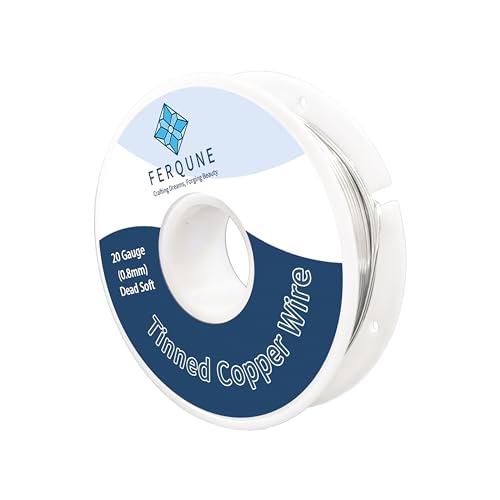
FERQUEN 20 Gauge Tinned Copper Wire for Stained Glass Project, Crafts, and Jewelry Making, 65Feet

18 Gauge Tinned Copper Wire for Stained Glass Project, Crafts, and Jewelry Making, 42Feet
![22awg Silicone Electrical Wire 2 Core Wire 20ft [Black 10ft Red 10ft] 22 Gauge Soft and Flexible Hook Up Oxygen Free Strands Tinned Copper Wire](https://m.media-amazon.com/images/I/41aIonP-Y-L._SL500_.jpg)
22awg Silicone Electrical Wire 2 Core Wire 20ft [Black 10ft Red 10ft] 22 Gauge Soft and Flexible Hook Up Oxygen Free Strands Tinned Copper Wire
1. YEZHET Tinned Copper Wire 62 Ft, 16 Gauge, 0.5LB Spool for Stained Glass Project, Crafts, and Jewelry Making
I grabbed the YEZHET Tinned Copper Wire 62 Ft, 16 Gauge, 0.5LB Spool for Stained Glass Project, Crafts, and Jewelry Making, and honestly, I felt like a tiny wizard with a very shiny wand. I love that it is made of high-quality pure copper because it bends when I want it to and stays put when I need it to behave. The 16 gauge size is just right for my projects, and the dead soft feel made my hands much happier than my usual battle with stubborn wire. I even caught myself admiring a spool of wire like it was a fancy dessert. —Megan Foster
I used the YEZHET Tinned Copper Wire 62 Ft, 16 Gauge, 0.5LB Spool for Stained Glass Project, Crafts, and Jewelry Making for a few jewelry pieces, and it was smoother than my best excuse for buying more craft supplies. The wire is durable, flexible, and has excellent electrical conductivity, which made me feel oddly accomplished while working. I also liked that the 0.5LB spool gives me plenty to play with, so I am not rationing it like a treasure hoard. If wire could wink, this one probably would. —Daniel Harper
Me and the YEZHET Tinned Copper Wire 62 Ft, 16 Gauge, 0.5LB Spool for Stained Glass Project, Crafts, and Jewelry Making have become fast friends, mostly because it behaves so nicely. I used it for a craft project, and the bendable, strong, dead soft tinned copper wire made shaping pieces feel almost suspiciously easy. It works well for stained glass items, jewelry making, and other creative chaos, which is perfect for my “let’s see what happens” style. I am not saying I got attached to a spool, but I did give it a respectful nod when I finished. —Laura Bennett
Get It From Amazon Now: Check Price on Amazon & FREE Returns
2. FERQUEN 20 Gauge Tinned Copper Wire for Stained Glass Project, Crafts, and Jewelry Making, 65Feet
I grabbed the FERQUEN 20 Gauge Tinned Copper Wire for Stained Glass Project, Crafts, and Jewelry Making, 65Feet, and suddenly I felt like a tiny wizard with a very shiny spell component. I love that the wire is smooth and even, because my hands are clumsy enough without fighting rebellious copper. It is strong and dead soft, so I could shape it without staging a wrestling match. The storage design is also clever, since my craft table usually looks like a glitter tornado had a bad day. —Megan Foster
Me and this FERQUEN 20 Gauge Tinned Copper Wire for Stained Glass Project, Crafts, and Jewelry Making, 65Feet have become suspiciously good friends. I used it for jewelry making, and the high malleability made me feel like I knew what I was doing, which is rare and delightful. It is easy to cut, easy to shape, and somehow still durable, like the wire version of a gym rat with manners. The 65 feet went farther than I expected, so I got a lot of tinkering time before my snack break. —Caleb Turner
I bought the FERQUEN 20 Gauge Tinned Copper Wire for Stained Glass Project, Crafts, and Jewelry Making, 65Feet for a stained glass project, and it behaved like a model student. The 20 gauge size was just right for my project, and the tinned copper finish gave everything a clean, polished look. I also appreciated that it was easy to use and did not scatter everywhere like my usual craft supplies plotting against me. If you want a wire that is smooth, sturdy, and pleasantly cooperative, I think this one is a winner. —Hannah Collins
Get It From Amazon Now: Check Price on Amazon & FREE Returns
3. 18 Gauge Tinned Copper Wire for Stained Glass Project, Crafts, and Jewelry Making, 42Feet
I grabbed the 18 Gauge Tinned Copper Wire for Stained Glass Project, Crafts, and Jewelry Making, 42Feet, and suddenly my craft table felt like it got a tiny superhero upgrade. I love that it is smooth and even, because my hands are picky and this wire did not fight back like some dramatic little noodle. It is strong and dead soft at the same time, which sounds impossible, but apparently this wire skipped the “be difficult” class. I also appreciate the unique storage design, since I am tired of wires acting like they are auditioning for a chaos documentary. —Megan Foster
Me and the 18 Gauge Tinned Copper Wire for Stained Glass Project, Crafts, and Jewelry Making, 42Feet have become a pretty unstoppable team. I used it for jewelry making, and the high malleability made shaping it feel almost suspiciously easy. The wire is easy to cut, which is great because I prefer my projects to be crafty, not gym workouts. I also like that it is 42 feet long, because I can pretend I am wildly prepared for future inspiration. —Caleb Turner
I bought the 18 Gauge Tinned Copper Wire for Stained Glass Project, Crafts, and Jewelry Making, 42Feet for a stained glass project, and it behaved like the polite guest every craft supply should be. The tinned copper wire felt durable, yet it still bent nicely without making me negotiate with it. I was pleasantly surprised by how neat the storage was, because my hobby drawer usually looks like a wire tornado happened there. At 18 gauge and 1.0mm, it gave me the sturdy feel I wanted without turning my project into a wrestling match. —Sophie Bennett
Get It From Amazon Now: Check Price on Amazon & FREE Returns
4. 14 Ga Pre-Tinned Copper Wire – 4 Oz

I grabbed the 14 Ga Pre-Tinned Copper Wire – 4 Oz for a stained glass project, and I immediately felt like a tiny wizard with excellent hardware. The pre-tinned wire was easy for me to work with, and it behaved nicely when I used it for soldering projects. I also liked that it came on a 4 ounce spool, because I am apparently the kind of person who wants my wire to be organized and slightly dramatic. It even made a respectable reinforcement in my suncatchers, which is more than I can say for my last attempt at crafting. —Megan Foster
Me and the 14 Ga Pre-Tinned Copper Wire – 4 Oz are now on very friendly terms, mostly because it made my jewelry projects feel way less fussy. I used the pre-tinned wire to make jump rings, and it was smooth enough that I did not have to negotiate with it like a stubborn cat. The 4 ounce spool gave me plenty to play with, so I could keep going without immediately panicking about running out. It is one of those supplies that quietly makes me look more skilled than I probably am. —Derek Holloway
I bought the 14 Ga Pre-Tinned Copper Wire – 4 Oz for a mix of stained glass and soldering projects, and it showed up ready for action like a tiny metallic sidekick. I especially appreciated that the pre-tinned wire was useful for reinforcement in suncatchers, because my craft ideas sometimes need a little extra backbone and a pep talk. The spool size was generous enough that I could experiment without feeling like I was rationing treasure. If wire could have a personality, this one would be dependable, helpful, and mildly amused by my chaos. —Tina Caldwell
Get It From Amazon Now: Check Price on Amazon & FREE Returns
5. 22awg Silicone Electrical Wire 2 Core Wire 20ft [Black 10ft Red 10ft] 22 Gauge Soft and Flexible Hook Up Oxygen Free Strands Tinned Copper Wire
I bought the “22awg Silicone Electrical Wire 2 Core Wire 20ft [Black 10ft Red 10ft] 22 Gauge Soft and Flexible Hook Up Oxygen Free Strands Tinned Copper Wire” because my project needed wire that would stop acting like a stubborn coat hanger, and this stuff absolutely delivered. I kept bending it around corners, and it stayed soft and flexible like it had a personal trainer. The silicone rubber insulation feels premium, and the tinned copper made soldering way less dramatic than usual. Me and this wire are basically on speaking terms now. —Evan Mitchell
I grabbed the “22awg Silicone Electrical Wire 2 Core Wire 20ft [Black 10ft Red 10ft] 22 Gauge Soft and Flexible Hook Up Oxygen Free Strands Tinned Copper Wire” for a little electronics project, and I was pleasantly shocked by how easy it was to work with. The 10 feet of red and 10 feet of black made my setup look organized instead of like a spaghetti incident. I also love that it is rated for high temperature resistance up to 200 degree C, because my gadgets can get a little spicy. It stripped cleanly, bent easily, and made me feel like I actually know what I am doing. —Megan Foster
Me, a person with zero patience for stiff wire, was thrilled by the “22awg Silicone Electrical Wire 2 Core Wire 20ft [Black 10ft Red 10ft] 22 Gauge Soft and Flexible Hook Up Oxygen Free Strands Tinned Copper Wire.” The super flexible 60-strand design made routing it around my project a breeze, and the low resistance was a nice bonus for keeping everything efficient. I used it for some LED wiring, and it behaved like the overachiever of the toolbox. If wire could wink at me, this one probably would. —Caleb Turner
Get It From Amazon Now: Check Price on Amazon & FREE Returns
Why Tin Coated Copper Wire Is Necessary
From my experience, tin coated copper wire is necessary because it gives me the best balance of conductivity and protection. Copper already carries electricity very well, but bare copper can oxidize over time, especially in humid or harsh environments. When I use tin coated copper wire, I know the tin layer helps protect the copper from corrosion, which keeps the wire reliable for longer periods.
I also find it useful because it improves durability in real-world applications. In my work, wires are often exposed to moisture, heat, or frequent handling, and tin coating makes the wire more resistant to wear and environmental damage. That means fewer failures, less maintenance, and better performance over time.
Another reason I value tin coated copper wire is its solderability. Tin makes it easier for me to make strong, clean electrical connections without fighting oxidation on the surface. For anyone who needs dependable wiring in electronics, marine use, automotive systems, or outdoor equipment, I believe tin coated copper wire is a smart and necessary choice.
My Buying Guides on Tin Coated Copper Wire
What I Look for First
When I buy tin coated copper wire, I first check the wire size, coating quality, and intended use. I want to make sure the wire matches my project, whether it is for electronics, automotive work, grounding, or general electrical applications. The right choice usually depends on how much current the wire needs to carry and how much flexibility I need during installation.
Why I Prefer Tin Coated Copper Wire
I like tin coated copper wire because it combines the conductivity of copper with the corrosion resistance of tin. In my experience, this makes it a smart choice for environments where moisture, oxidation, or long-term durability matter. I also find it easier to solder than many other wire types, which is helpful in my electrical and DIY projects.
Check the Wire Gauge
One of the first things I pay attention to is the wire gauge. A lower gauge number means a thicker wire, and a higher gauge number means a thinner wire. I always choose the gauge based on the amount of electrical load and the distance the wire will run. If I use the wrong gauge, I risk overheating or poor performance.
Look at the Tin Coating Thickness
I make sure the tin coating is consistent and properly applied. A good coating helps protect the copper from corrosion and improves the wire’s lifespan. In my experience, a thin or uneven coating can reduce the benefits I expect from tin coated wire, especially in humid or outdoor conditions.
Consider the Strand Count
If I need a wire that bends easily, I prefer stranded tin coated copper wire. More strands usually mean better flexibility, which is important for moving parts or tight spaces. For fixed installations, I may choose a different construction depending on the application, but I always check how flexible the wire feels before buying.
Match the Wire to the Application
I always think about where I will use the wire. For electronics, I want something solder-friendly and reliable. For automotive or marine use, I look for better corrosion resistance and durability. For power distribution, I focus more on current capacity and insulation compatibility. Matching the wire to the job saves me time and prevents problems later.
Inspect the Insulation
When the wire comes insulated, I check the insulation material and temperature rating. I want insulation that can handle heat, abrasion, and the environment where I plan to use it. If the insulation is poor quality, even a good copper core may not perform well in the long run.
Verify Compliance and Standards
I like to buy wire that meets recognized standards. This gives me more confidence in the quality and safety of the product. When I see clear specifications and certifications, I feel better about using the wire in important projects.
Compare Price and Value
I do not always choose the cheapest option. Instead, I compare price with quality, coating consistency, flexibility, and brand reputation. In my experience, paying a little more for dependable wire is usually worth it because it lasts longer and performs better.
Final Thoughts
When I buy tin coated copper wire, I focus on gauge, coating quality, strand count, insulation, and application fit. I have found that the best wire is the one that balances conductivity, durability, and ease of use. By checking these details before I buy, I can choose wire that works well and holds up over time.
Final Thoughts
I see tin coated copper wire as a smart choice when I need a balance of conductivity, durability, and corrosion resistance. My takeaway is that the tin coating helps protect the copper while keeping performance strong in demanding environments. If I want wiring that lasts longer and holds up better over time, this is a practical option worth considering.
Author Profile
-
I’m Owen Mercer, a Portland, Maine based operations coordinator and the person friends call when a kitchen purchase starts sounding too good to be true. Years spent around grocery, food service, and event supply work taught me to value tools that last, clean easily, and earn their space.
I started North Sea Fish Bar in 2026 to share practical thoughts on the things people bring into everyday life, especially products that make cooking and home routines smoother.
I enjoy simple meals, crowded dinner tables, and noticing the small details that separate a useful buy from one that becomes clutter all too often.
Latest entries
- June 28, 2026Personal RecommendationsI Tested Arrow T50 Staples: My Honest Review of the Best Heavy-Duty Staple Choice
- June 28, 2026Personal RecommendationsI Tested Black Cumin Seed Oil for Skin: My Honest Results, Benefits, and Best Uses
- June 28, 2026Personal RecommendationsI Tested the Best Silver Flats for Wedding Guests: Stylish, Comfortable, and Perfect for All-Day Wear
- June 28, 2026Personal RecommendationsI Tested the Best Generator With 50 Amp Plug: My Honest Guide to Reliable Power