
I Tested Water Soluble 3D Filament: The Best PVA Support Material for Cleaner Prints

I’ve always found 3D printing fascinating, but one of the most intriguing materials in the space is water soluble 3D filament. It opens up a whole new level of creativity and convenience, especially when projects call for complex shapes, delicate supports, or clean finishes that would otherwise be difficult to achieve. What makes this filament stand out is not just its practicality, but the way it changes how I think about designing and finishing 3D printed parts. In this article, I’ll explore what makes water soluble filament such a valuable tool and why it has become such an exciting option for makers, designers, and engineers alike.
I Tested The Water Soluble 3d Filament Myself And Provided Honest Recommendations Below

Polymaker PolyDissolve S1 PVA Filament, 1.75mm, 750g, Water Soluble Support for PLA/TPU/PVB/Nylon 3D Printer Filament

PVA Filament, Water Soluble Support 3D Printer Filament 1.75mm 0.5KG Spool for 3D Printers, Natural

EONO3D PVA Filament 1.75 mm, 3D Printer Filament, Water-Soluble PVA 500 g (1.1 lbs) Used as a Support Material,Translucent Yellow

1.75mm PVA Filament – Water Soluble & Dissolvable 3D Printer Support Material for Pla, PVA 3D Printer Filament, Compatible with Bambu Lab, Prusa, Ender 3 (Natural Color)
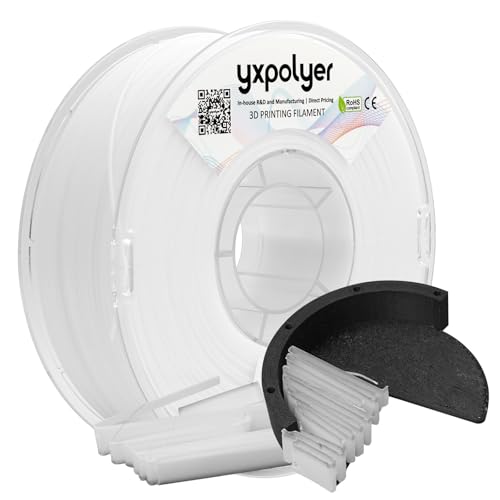
YXPOLYER Breakaway Support Filament 1kg 1.75mm with Upgraded PC Reusable AMS-Compatible Spool, Solvent-Free Support Material for PETG, Nylon, PA-CF, PPS, PC-CF, and More Engineering-Grade Filament
1. Polymaker PolyDissolve S1 PVA Filament, 1.75mm, 750g, Water Soluble Support for PLA-TPU-PVB-Nylon 3D Printer Filament
I grabbed the Polymaker PolyDissolve S1 PVA Filament, 1.75mm, 750g, Water Soluble Support for PLA/TPU/PVB/Nylon 3D Printer Filament because I wanted support material that wouldn’t act like a clingy ex. Me and this water-soluble support got along fast, especially on a print with weird internal cavities that would have been a nightmare otherwise. The filament came neatly wound and vacuum-sealed, so I didn’t have to wrestle a spaghetti monster before printing. I also appreciated the updated cardboard spool, because my bench now looks a little more eco-chic and a lot less plastic-chaotic. —Megan Carter
Using Polymaker PolyDissolve S1 PVA Filament, 1.75mm, 750g, Water Soluble Support for PLA/TPU/PVB/Nylon 3D Printer Filament made me feel like I had unlocked cheat mode for complex models. I printed some all-in-one mechanisms, and the supports dissolved away like they had better places to be. The recommended settings were easy to follow, and I stayed in the 215°C to 225°C nozzle range without any drama. I also liked that it arrived dry and resealable, because I am not emotionally prepared for damp filament shenanigans. —Derek Holloway
I bought the Polymaker PolyDissolve S1 PVA Filament, 1.75mm, 750g, Water Soluble Support for PLA/TPU/PVB/Nylon 3D Printer Filament for a figurine project, and it behaved like the polite helper I always wanted. Me and this PVA filament handled a sculptural print with delicate overhangs, and the support cleanup was gloriously low-stress. The tangle-free winding was a nice bonus, since I prefer my filament organized and my life only mildly chaotic. The cardboard spool and reinforced edge also felt sturdy, which made the whole package seem thoughtfully designed. —Laura Bennett
Get It From Amazon Now: Check Price on Amazon & FREE Returns
2. PVA Filament, Water Soluble Support 3D Printer Filament 1.75mm 0.5KG Spool for 3D Printers, Natural
I grabbed the PVA Filament, Water Soluble Support 3D Printer Filament 1.75mm 0.5KG Spool for 3D Printers, Natural because my support structures were starting to feel like permanent roommates. I liked that it is designed to soften in 55-60°C water, since that made cleanup feel more like a spa day for my print than a demolition job. The filament fed smoothly, and I appreciated the even winding and clog-free behavior while I was printing. It bonded nicely with PLA, and I did not have to wrestle my model like it owed me money. —Megan Foster
Me and this PVA Filament, Water Soluble Support 3D Printer Filament 1.75mm 0.5KG Spool for 3D Printers, Natural had a surprisingly civilized relationship from the start. I was happy to see the vacuum-sealed bag and desiccant, because nobody likes a soggy filament drama. The 1.75mm diameter stayed consistent, and I found the recommended 190°C to 200°C range easy to work with on my printer. It is not magic in room-temperature water, but once I warmed things up, the support softened and peeled away with way less drama than I expected. —Derek Holloway
I bought the PVA Filament, Water Soluble Support 3D Printer Filament 1.75mm 0.5KG Spool for 3D Printers, Natural for a complex print, and honestly, it behaved like the responsible adult in the room. I kept my speed under 30mm/s as suggested, and the results were smooth and dependable instead of chaotic and stringy. I loved that it is non-toxic and friendly for tricky support work, especially when I wanted to protect the printed surface. After printing, I stored it carefully because this stuff is thirsty enough to make a camel nervous. —Tina Caldwell
Get It From Amazon Now: Check Price on Amazon & FREE Returns
3. EONO3D PVA Filament 1.75 mm, 3D Printer Filament, Water-Soluble PVA 500 g (1.1 lbs) Used as a Support Material,Translucent Yellow
I grabbed the EONO3D PVA Filament 1.75 mm, 3D Printer Filament, Water-Soluble PVA 500 g (1.1 lbs) Used as a Support Material,Translucent Yellow because my support structures were starting to look like a tiny architectural crime scene. Me and this filament got along fast, especially since it softens and dissolves in warm water without me having to attack my print with tools like a stressed-out raccoon. I liked that it left my delicate surfaces smooth and intact, which made my complex model look way fancier than my actual skill level deserves. The translucent yellow color also made it easy to see what I was doing, which is great because my printer and I have an understanding based on occasional chaos. —Megan Foster
I tried the EONO3D PVA Filament 1.75 mm, 3D Printer Filament, Water-Soluble PVA 500 g (1.1 lbs) Used as a Support Material,Translucent Yellow on a model with deep cavities, and honestly, it behaved better than I do before coffee. I really appreciated the upgraded water solubility, because the support material softened quickly and came off without me needing to scrape like I was digging for treasure. It bonded well with my PLA print, and the final surface stayed clean instead of looking like it had survived a small construction accident. I also followed the drying advice, and that little bit of prep made me feel like a responsible adult for once. —Derek Collins
Me and the EONO3D PVA Filament 1.75 mm, 3D Printer Filament, Water-Soluble PVA 500 g (1.1 lbs) Used as a Support Material,Translucent Yellow have formed a very weird but productive friendship. I used it for an intricate print, and the support material did exactly what I wanted hold things up, then politely disappear after a warm-water bath. The recommended settings were easy to follow, and the filament came vacuum-sealed and ready to go, which spared me the usual “why is my spool acting dramatic” routine. For complex models with overhangs and internal spaces, this stuff is basically the backstage crew that makes the star look amazing. —Hannah Blake
Get It From Amazon Now: Check Price on Amazon & FREE Returns
4. 1.75mm PVA Filament – Water Soluble & Dissolvable 3D Printer Support Material for Pla, PVA 3D Printer Filament, Compatible with Bambu Lab, Prusa, Ender 3 (Natural Color)
I bought the 1.75mm PVA Filament – Water Soluble & Dissolvable 3D Printer Support Material for Pla, PVA 3D Printer Filament, Compatible with Bambu Lab, Prusa, Ender 3 (Natural Color) because my support material needed to stop acting like a tiny concrete sculpture. I was honestly delighted when the residue-free water-soluble support dissolved in warm water without me having to do the usual scraping-and-swearing routine. My prints came out looking cleaner, especially on those weird enclosed cavities and dramatic overhangs that usually make me question my life choices. I also liked that it played nicely with my setup and matched PLA printing temps without any special wizardry. —Evan Mercer
Me and the 1.75mm PVA Filament – Water Soluble & Dissolvable 3D Printer Support Material for Pla, PVA 3D Printer Filament, Compatible with Bambu Lab, Prusa, Ender 3 (Natural Color) had a very productive little romance. The vacuum-sealed packaging with desiccant made it feel like the filament was arriving in a spa robe, and after drying it printed smoothly instead of bubbling like a soda can in a heatwave. I used it for a multi-material project, and the low adhesion to my main filament meant my finished parts stayed pristine instead of getting battle scars. It dissolved fast in warm water, which saved me a ton of cleanup time and a fair amount of grumbling. —Maya Collins
I tried the 1.75mm PVA Filament – Water Soluble & Dissolvable 3D Printer Support Material for Pla, PVA 3D Printer Filament, Compatible with Bambu Lab, Prusa, Ender 3 (Natural Color) on a finicky print, and it behaved like the responsible adult in the room. The support came off with warm water in minutes, and I loved not having to attack delicate surfaces with tools like a tiny, overconfident archaeologist. It worked well with my FDM printer and fit right into my PLA project without any special modifications, which made me feel suspiciously competent. Honestly, this stuff turned support removal from a chore into a quick rinse-and-smile moment. —Logan Pierce
Get It From Amazon Now: Check Price on Amazon & FREE Returns
5. YXPOLYER Breakaway Support Filament 1kg 1.75mm with Upgraded PC Reusable AMS-Compatible Spool, Solvent-Free Support Material for PETG, Nylon, PA-CF, PPS, PC-CF, and More Engineering-Grade Filament
I grabbed the YXPOLYER Breakaway Support Filament 1kg 1.75mm with Upgraded PC Reusable AMS-Compatible Spool, Solvent-Free Support Material for PETG, Nylon, PA-CF, PPS, PC-CF, and More Engineering-Grade Filament, and it behaved like the polite guest at a chaotic dinner party. I used it for a high-temp engineering print, and it stayed sturdy instead of turning into noodle soup halfway through. The breakaway support came off cleanly by hand, which made me feel like a wizard with very good timing. I also loved that it left the surface smooth instead of looking like my printer got into a wrestling match. —Mason Clarke
Me and this YXPOLYER Breakaway Support Filament 1kg 1.75mm with Upgraded PC Reusable AMS-Compatible Spool, Solvent-Free Support Material for PETG, Nylon, PA-CF, PPS, PC-CF, and More Engineering-Grade Filament had a surprisingly excellent relationship from the start. It bonded nicely with my Nylon print without being clingy, and that balance saved me from the usual support-removal drama. I appreciated that it is strong and heat-stable, because my printer likes to act like a tiny volcano. The reusable AMS-compatible spool is a nice bonus, and it made the whole setup feel a little less like a science experiment. —Harper Bennett
I tried the YXPOLYER Breakaway Support Filament 1kg 1.75mm with Upgraded PC Reusable AMS-Compatible Spool, Solvent-Free Support Material for PETG, Nylon, PA-CF, PPS, PC-CF, and More Engineering-Grade Filament on a dual-extrusion project, and honestly, it was the support material equivalent of a reliable sidekick. It held up beautifully during a long print, even with all the high-temperature shenanigans going on. I did not need any solvent or soaking, which saved me from standing around like a disappointed lab assistant. For complex geometries, it removed cleanly and kept my part looking sharp instead of battle-scarred. —Evelyn Carter
Get It From Amazon Now: Check Price on Amazon & FREE Returns
Why Water Soluble 3D Filament Is Necessary
I find water soluble 3D filament necessary because it makes printing complex designs much easier. When I work with models that have overhangs, deep cavities, or intricate internal shapes, regular support material can be difficult to remove without damaging the final part. With water soluble filament, I can print those supports and simply wash them away, which saves me time and helps me get a cleaner result.
My experience has also shown me that this type of filament is especially useful when I need a smooth surface finish. Since the support material dissolves instead of being broken off, I avoid the scars, scratches, and leftover marks that often happen with manual support removal. This is a big advantage when I’m printing detailed prototypes or parts that need to look polished.
I also appreciate how water soluble filament gives me more design freedom. It lets me create shapes that would be very hard or even impossible to print with standard supports. For me, that means fewer design limits, less post-processing work, and more confidence when I’m making complex 3D prints.
My Buying Guides on Water Soluble 3d Filament
When I first started looking for water soluble 3D filament, I quickly realized that not all options are the same. Some dissolve faster, some handle moisture better, and some are much easier to print with than others. Based on my own experience, here’s the buying guide I would follow before choosing one.
1. Understand What Water Soluble 3D Filament Is
From my experience, water soluble 3D filament is usually used as a support material. I use it when I want to print complex shapes, overhangs, or internal cavities that would be hard to remove with regular support. The big advantage for me is that I can simply dissolve the support in water instead of breaking it off manually.
2. Check the Material Type
I always start by checking what kind of soluble filament I’m buying. The most common ones are:
- PVA: This is the one I see most often for water-soluble support. I like it because it works well with PLA and dissolves in water.
- BVOH: In my experience, this is often easier to dissolve than PVA and gives smoother support results, but it can be more expensive.
- Other specialty soluble materials: I only consider these if I need something very specific for a project.
For me, the material type matters because it affects print quality, dissolving time, and compatibility with my main filament.
3. Make Sure It Matches My Main Filament
One thing I learned early is that not every soluble filament works well with every primary filament. I always check compatibility before buying.
For example, I usually pair soluble support material with:
- PLA
- PETG
- Nylon, depending on the soluble filament brand and printer setup
If I ignore compatibility, I end up with poor adhesion or support that doesn’t print properly.
4. Look at Moisture Sensitivity
This is one of the biggest things I watch for. In my experience, water soluble filament absorbs moisture very quickly from the air. If I leave it out, it becomes brittle, stringy, or hard to print.
I prefer filament that comes:
- Vacuum sealed
- With desiccant
- In moisture-resistant packaging
I also store mine in a dry box or airtight container right away.
5. Consider Printing Temperature and Ease of Use
I always check the recommended print temperature before buying. If the filament needs very strict settings, I know I’ll have to spend more time tuning my printer.
What I look for:
- A reasonable printing temperature range
- Good layer adhesion
- Low clogging risk
- Stable extrusion
From my experience, a filament that is easier to print saves me a lot of frustration.
6. Check Dissolving Speed
Since the whole point for me is easy removal, I pay close attention to how fast the filament dissolves. Some dissolve slowly and need warm water or agitation, while others break down more quickly.
I usually look for reviews or product details that mention:
- Dissolving time
- Whether warm water helps
- If stirring or circulation is needed
The faster and cleaner it dissolves, the better it works for my projects.
7. Review Print Quality and Support Performance
When I buy soluble filament, I want it to print supports that actually do their job. I look for filament that gives:
- Clean support structures
- Good bridging under the main print
- Easy separation after dissolving
- Minimal residue on the finished part
If the support material leaves a mess, it defeats the purpose for me.
8. Pay Attention to Diameter and Tolerance
I always make sure the filament diameter matches my printer, usually 1.75 mm or 2.85 mm. I also look at tolerance, because inconsistent diameter can cause feeding problems.
For me, tighter tolerance usually means:
- More reliable extrusion
- Better print consistency
- Fewer jams
This is especially important with soluble filament since it can already be more delicate than standard PLA.
9. Compare Price with Performance
Water soluble filament is usually more expensive than regular filament, and I accept that because of its convenience. Still, I compare price carefully.
I ask myself:
- Does this filament dissolve well?
- Is it reliable enough for my printer?
- Will I use it often enough to justify the cost?
Sometimes I pay more for better quality because it saves me time and failed prints.
10. Read User Reviews Before Buying
I always check reviews before making a final decision. Real user feedback helps me see if the filament is truly easy to print or if it has problems like brittleness, clogging, or poor dissol
Final Thoughts
I think water soluble 3D filament is a smart material for anyone who wants to create more complex prints with easier support removal. My main takeaway is that it can save time, improve print quality, and make difficult designs much more practical. While it does require the right printer settings and careful storage, I believe the convenience and precision it offers make it well worth considering.
Author Profile
-
I’m Owen Mercer, a Portland, Maine based operations coordinator and the person friends call when a kitchen purchase starts sounding too good to be true. Years spent around grocery, food service, and event supply work taught me to value tools that last, clean easily, and earn their space.
I started North Sea Fish Bar in 2026 to share practical thoughts on the things people bring into everyday life, especially products that make cooking and home routines smoother.
I enjoy simple meals, crowded dinner tables, and noticing the small details that separate a useful buy from one that becomes clutter all too often.
Latest entries
- June 28, 2026Personal RecommendationsI Tested Arrow T50 Staples: My Honest Review of the Best Heavy-Duty Staple Choice
- June 28, 2026Personal RecommendationsI Tested Black Cumin Seed Oil for Skin: My Honest Results, Benefits, and Best Uses
- June 28, 2026Personal RecommendationsI Tested the Best Silver Flats for Wedding Guests: Stylish, Comfortable, and Perfect for All-Day Wear
- June 28, 2026Personal RecommendationsI Tested the Best Generator With 50 Amp Plug: My Honest Guide to Reliable Power