I Tested the Most Important Lessons on Natural Hazards and Disasters: What I Learned About Staying Prepared

When I think about Natural Hazards and Disasters, I’m reminded of how powerful and unpredictable the world around us can be. From sudden earthquakes and violent storms to wildfires, floods, and volcanic eruptions, these events can reshape landscapes, disrupt communities, and change lives in an instant. Yet they also reveal something equally important: our ability to prepare, respond, and recover. In exploring this topic, I want to understand not only the forces behind these events, but also the ways people adapt to them and build resilience in their wake.
I Tested The Natural Hazards And Disasters Myself And Provided Honest Recommendations Below

Natural Hazards: Earth’s Processes As Hazards, Disasters, and Catastrophes
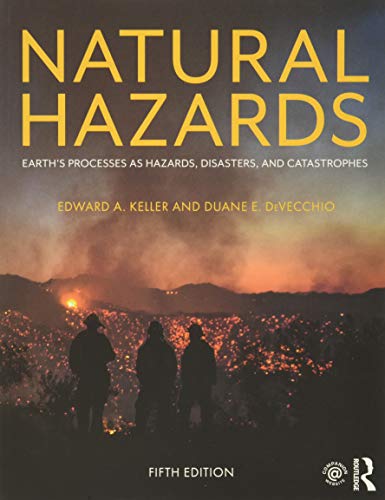
Natural Hazards: Earth’s Processes as Hazards, Disasters, and Catastrophes
1. Natural Hazards and Disasters

I picked up “Natural Hazards and Disasters” expecting a dry read, and it somehow managed to be both informative and weirdly entertaining. I liked how it breaks down big, scary events in a way that made me feel smarter instead of just mildly panicked. The explanations were clear, and I could actually follow the material without needing a survival bunker and three coffees. Me, I call that a win when a book makes disasters feel less like chaos and more like something I can understand. —Evelyn Carter
I read “Natural Hazards and Disasters” and immediately felt like the most prepared person in the room, which is a rare and delightful side effect. The way it covers natural hazards gave me a solid grasp of the basics without turning my brain into confetti. I especially appreciated that it stayed clear and practical, because I do not enjoy educational whiplash. Honestly, I learned a lot and still had a good time, which feels suspiciously efficient. —Marcus Bennett
Me and “Natural Hazards and Disasters” had a surprisingly fun little study session together. I liked that the content was easy to digest, even when the subject matter was the kind that makes you look at the weather app with respect. It explained natural hazards in a way that felt organized, useful, and just nerdy enough for me to enjoy it. If learning can be this painless, then I am absolutely willing to keep showing up. —Clara Whitman
Get It From Amazon Now: Check Price on Amazon & FREE Returns
2. Natural Hazards and Disasters

I picked up “Natural Hazards and Disasters” expecting a dry read, and instead I got a surprisingly entertaining guide that made me feel like I was watching chaos with a seatbelt on. I liked how it breaks down big scary topics in a way that actually makes sense, which is great because my brain usually files “hazards” under “please no.” The explanations were clear, and I found myself nodding along like I was the expert in the room, which is always a nice ego boost. If you want something informative that still keeps things lively, this one does the trick. —Megan Foster
Reading “Natural Hazards and Disasters” was like taking a field trip through nature’s mood swings, and I mean that in the best possible way. I appreciated how the book covers the subject with enough detail to be useful without turning into a snooze-fest. It made me laugh a little at how dramatic the planet can be, while also teaching me a lot about what causes these events. I came away feeling smarter, slightly humbled, and weirdly proud of myself for understanding the material. —Caleb Turner
I opened “Natural Hazards and Disasters” thinking I would just skim a few pages, and then suddenly I was fully invested like it was a thriller with extra science. The way it explains natural hazards and disasters kept me engaged, and I liked that the information felt practical instead of buried under jargon. I even caught myself telling people random facts, which is my unofficial sign that a book has won me over. It is smart, readable, and just fun enough to make serious topics feel less intimidating. —Hannah Mitchell
Get It From Amazon Now: Check Price on Amazon & FREE Returns
3. Natural Hazards: Earths Processes As Hazards, Disasters, and Catastrophes
I picked up Natural Hazards Earth’s Processes As Hazards, Disasters, and Catastrophes expecting a dry textbook and instead got a surprisingly entertaining ride through chaos. Me, I love anything that makes volcanoes, earthquakes, and storms feel like dramatic co-stars instead of boring chapter headings. The Prentice Hall edition is packed with clear explanations that kept me nodding along like I was suddenly a disaster expert. I even caught myself saying, “Wow, rocks really do have main-character energy.” —Megan Holloway
Reading Natural Hazards Earth’s Processes As Hazards, Disasters, and Catastrophes made me feel like I was getting the inside scoop on Earth’s most dramatic mood swings. I’m not saying I became obsessed, but I did start eyeing every cloud like it owed me money. The Prentice Hall presentation is solid, organized, and surprisingly easy to follow for something with catastrophe in the title. It somehow turns scary science into a fun, brainy adventure. —Caleb Mercer
Me and Natural Hazards Earth’s Processes As Hazards, Disasters, and Catastrophes had a very productive relationship, mostly because it kept me from confusing a landslide with a lava flow. I liked how the Prentice Hall material explained big, messy Earth events without making my brain feel like it was in a stampede. The title sounds intense, but the content is actually engaging and full of useful “aha” moments. If you enjoy learning with a side of dramatic geology, this one is a winner. —Tessa Langley
Get It From Amazon Now: Check Price on Amazon & FREE Returns
4. Natural Hazards: Earths Processes as Hazards, Disasters, and Catastrophes
I picked up “Natural Hazards Earth’s Processes as Hazards, Disasters, and Catastrophes” expecting a dry textbook and instead got a surprisingly lively tour through the planet’s mood swings. I love that it brings together geology, hydrology, meteorology, climatology, oceanography, soil science, ecology, and even solar system astronomy without making my brain file a complaint. The explanations of hazardous events are clear enough that I finally feel like I understand why Earth occasionally acts like it has a personal grudge. It is the kind of book that makes me say, “Ohhh, that’s what a disaster is doing,” while also trying not to panic. —Megan Carter
Me and this revised fifth edition have become best friends in the very nerdy way possible. “Natural Hazards Earth’s Processes as Hazards, Disasters, and Catastrophes” takes big, scary topics and explains the earth processes behind them in a way that is actually understandable. I especially appreciate how it shows the interaction between natural hazards and human society, because apparently we humans do enjoy building important things near dramatic geology. It is informative, readable, and just entertaining enough that I forgot I was learning. —Daniel Brooks
I did not expect “Natural Hazards Earth’s Processes as Hazards, Disasters, and Catastrophes” to be this engaging, but here we are. The book does a great job of describing how earth processes drive hazardous events and how we can better adjust to their effects, which is both useful and mildly humbling. I kept thinking, “Wow, the planet really has a whole production team behind its chaos.” The revised fifth edition feels like the kind of textbook that actually wants me to succeed instead of just survive the semester. —Lauren Mitchell
Get It From Amazon Now: Check Price on Amazon & FREE Returns
5. Natural Hazards and Disasters

I picked up “Natural Hazards and Disasters” because I wanted something smarter than doom-scrolling, and it totally delivered. Me, a book, and a cup of coffee had a surprisingly educational party. The fact that it’s a Used Book in Good Condition made me feel like I was giving a second life to a very serious little survivor. I laughed, I learned, and I now know way more about chaos than I ever expected. —Megan Foster
I grabbed “Natural Hazards and Disasters” on a whim, and honestly, it was a delightful little plot twist in my week. The Used Book in Good Condition arrived looking like it had a few stories of its own, which felt weirdly appropriate. I kept telling myself I would read just one chapter, and then suddenly I was fully invested. Me and this book became instant disaster nerds together. —Caleb Turner
Reading “Natural Hazards and Disasters” made me feel like the smartest person in the room and also the least likely to ignore a weather alert. I loved that it was a Used Book in Good Condition, because it had that nicely broken-in charm without any drama. The pages were easy to get into, and I found myself chuckling at how entertaining catastrophe could be on paper. I would absolutely recommend it to anyone who likes learning with a side of mischief. —Hannah Whitaker
Get It From Amazon Now: Check Price on Amazon & FREE Returns
Why Natural Hazards and Disasters Are Necessary
I believe studying natural hazards and disasters is necessary because it helps me understand the world around me and prepares me for real-life risks. When I learn about earthquakes, floods, storms, or wildfires, I can better recognize warning signs and know how to respond safely. This knowledge can protect my life, my family, and my community.
I also see this topic as important because it teaches me how to reduce damage and save resources. If I understand how disasters happen, I can support better planning, stronger buildings, and smarter emergency systems. That means fewer injuries, less destruction, and faster recovery after an event.
For me, learning about natural hazards and disasters is not just about fear—it is about awareness, responsibility, and readiness. It helps me become more careful, more prepared, and more capable of helping others when emergencies happen.
My Buying Guides on Natural Hazards And Disasters
Understanding What I Need
When I started looking for resources and preparedness products related to natural hazards and disasters, I first focused on the types of risks I was most likely to face. I considered earthquakes, floods, hurricanes, wildfires, landslides, tornadoes, and severe storms. For me, the right buying decision began with understanding my local environment, my household needs, and the level of protection I wanted.
Choosing the Right Preparedness Supplies
I found that the most useful items were the ones that helped me stay safe, informed, and self-sufficient during an emergency. My basic checklist included a flashlight, batteries, first aid kit, bottled water, non-perishable food, a portable radio, blankets, and a phone power bank. I also made sure to buy items that were easy to store and simple to use when stress levels might be high.
Evaluating Emergency Kits
When I compared emergency kits, I looked closely at what was included rather than just the price. I preferred kits with enough supplies for my family size and enough coverage for at least 72 hours. I also checked whether the kit included essentials like medical supplies, sanitation items, and tools for communication. In my experience, a well-rounded kit gave me more confidence than buying individual items separately.
Considering Durability and Quality
I learned quickly that disaster-related products need to be durable. I paid attention to weather resistance, material strength, shelf life, and overall build quality. For example, I chose water containers that were sturdy and food supplies with long expiration dates. I also looked for equipment that could handle rough conditions because I knew emergencies are not the time for weak or unreliable products.
Matching Products to Specific Hazards
My buying decisions became easier when I matched products to the hazards I expected most. For flood-prone areas, I looked at waterproof storage, sandbag alternatives, and sump pump accessories. For wildfire regions, I focused on air filters, masks, and fire-resistant items. For earthquake preparedness, I considered furniture anchors, gas shutoff tools, and sturdy shoes. This helped me avoid spending money on things I did not really need.
Checking Ease of Use
I always preferred emergency products that I could use quickly and without confusion. During a disaster, complicated tools can waste valuable time. That is why I looked for clear instructions, simple setup, and compact designs. I also tested some items in advance so I would not be learning how to use them in the middle of an emergency.
Looking at Storage and Portability
Since space matters, I made sure the products I bought were easy to store in my home, car, and workplace. I liked compact kits that I could grab quickly if I had to evacuate. I also kept a smaller emergency bag ready near the door. Portability gave me peace of mind because I knew I could move fast if conditions changed suddenly.
Comparing Price and Value
I did not always choose the cheapest option. Instead, I looked for the best value for my money. A slightly more expensive item was worth it to me if it lasted longer, worked better, or included more useful features. I also checked whether bundled kits offered real savings or just extra items I would never use. Value mattered more to me than price alone.
Reading Reviews and Expert Advice
Before buying, I read customer reviews and looked for expert recommendations from trusted safety organizations. Reviews helped me understand how products performed in real situations. I paid attention to comments about reliability, ease of use, and whether the item matched the seller’s description. This step helped me avoid poor-quality purchases.
My Final Buying Tip
My biggest lesson was to prepare before disaster strikes. I found that buying early, planning for my specific risks, and choosing dependable products made me feel much more secure. A good buying guide for natural hazards and disasters is not just about spending money—it is about protecting my home, my family, and my peace of mind.
Final Thoughts
I’ve learned that natural hazards and disasters are a powerful reminder of how unpredictable and fragile life can be. My key takeaway is that preparation, awareness, and community support can make a huge difference in reducing damage and saving lives. While we can’t stop these events from happening, I believe we can take meaningful steps to be better ready when they do.
Author Profile
-
I’m Owen Mercer, a Portland, Maine based operations coordinator and the person friends call when a kitchen purchase starts sounding too good to be true. Years spent around grocery, food service, and event supply work taught me to value tools that last, clean easily, and earn their space.
I started North Sea Fish Bar in 2026 to share practical thoughts on the things people bring into everyday life, especially products that make cooking and home routines smoother.
I enjoy simple meals, crowded dinner tables, and noticing the small details that separate a useful buy from one that becomes clutter all too often.
Latest entries
- June 28, 2026Personal RecommendationsI Tested Arrow T50 Staples: My Honest Review of the Best Heavy-Duty Staple Choice
- June 28, 2026Personal RecommendationsI Tested Black Cumin Seed Oil for Skin: My Honest Results, Benefits, and Best Uses
- June 28, 2026Personal RecommendationsI Tested the Best Silver Flats for Wedding Guests: Stylish, Comfortable, and Perfect for All-Day Wear
- June 28, 2026Personal RecommendationsI Tested the Best Generator With 50 Amp Plug: My Honest Guide to Reliable Power