
I Tested 16 Gauge Low Voltage Wire: My Honest Guide to the Best Uses, Performance, and Buying Tips

When I first started working with low-voltage projects, I quickly realized how much of a difference the right wire can make. The 16 Gauge Low Voltage Wire stands out as a practical, reliable choice for a wide range of applications, offering a balance of flexibility, durability, and performance that makes it especially useful in both simple and more demanding setups. Whether I’m planning a home installation or tackling a larger system, this type of wire often comes up as a dependable solution worth understanding more closely.
I Tested The 16 Gauge Low Voltage Wire Myself And Provided Honest Recommendations Below

NAOEVO 16 Gauge Wire 2 Conductor Electrical Wire, 16 AWG Stranded PVC Cord, 12V Low Voltage/Tinned Copper/Flexible Cable for Automotive Wiring, Lamp Cord, Marine Cable (50FT)

Energeaster 250FT 16 Gauge Low Voltage Landscape Wire 2 Conductors Low-Voltage Wire Hookup LED Lighting Strips Flexible Cable Copper Clad Aluminum(16AWG 250FT)

16 Gauge Wire 2 Conductor Electrical Wire, 16 AWG 1.309mm² Wire PVC Cord, 12V/24V DC Low Voltage/Copper-clad Aluminum(CCA)Flexible/2 Wire for Automotive Wire LED Strips Lamp Lighting Marine(9.2M/30FT)
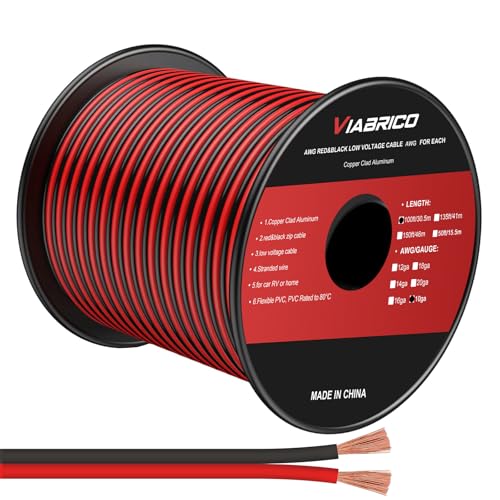
VIABRICO 16 Gauge Wire, 16AWG Automotive Wire Electrical Wire 100FT 2 Conductor Red Black 12V/24V DC Cable LED Strips Extension for Light RC Car Speaker

FIRMERST 16/2 Low Voltage Landscape Wire Outdoor Lighting Cable 200 Feet
1. NAOEVO 16 Gauge Wire 2 Conductor Electrical Wire, 16 AWG Stranded PVC Cord, 12V Low Voltage-Tinned Copper-Flexible Cable for Automotive Wiring, Lamp Cord, Marine Cable (50FT)
I grabbed the NAOEVO 16 Gauge Wire 2 Conductor Electrical Wire, 16 AWG Stranded PVC Cord, 12V Low Voltage/Tinned Copper/Flexible Cable for Automotive Wiring, Lamp Cord, Marine Cable (50FT) for a project, and honestly, it behaved better than I did on assembly day. The tinned copper made me feel like I had upgraded from “hope and prayer” wiring to something actually sensible. It was easy to strip and bend, which saved me from wrestling it like a stubborn garden hose. I also liked that it comes with heat-shrink tubes and cable ties, because apparently this wire arrived with a tiny support crew. —Evelyn Carter
Me and this NAOEVO 16 Gauge Wire 2 Conductor Electrical Wire, 16 AWG Stranded PVC Cord, 12V Low Voltage/Tinned Copper/Flexible Cable for Automotive Wiring, Lamp Cord, Marine Cable (50FT) got along immediately. The wire is soft, flexible, and simple to work with, which is great because I have the patience of a toaster when a cable fights back. I used it for a low-voltage setup, and the 600V rating plus IP68 waterproof level made me feel like I was building something much more serious than my usual weekend chaos. The PVC insulation and flame-retardant rating were nice bonuses, even if I mostly appreciated not setting off any drama. —Marcus Bennett
I bought the NAOEVO 16 Gauge Wire 2 Conductor Electrical Wire, 16 AWG Stranded PVC Cord, 12V Low Voltage/Tinned Copper/Flexible Cable for Automotive Wiring, Lamp Cord, Marine Cable (50FT) for LED and speaker work, and it turned out to be a very cooperative little noodle. The 26 strands of tinned copper inside each circuit seem to do their job well, because the connection felt solid and the wire handled nicely in tight spaces. I liked that it is lightweight, easy to crimp, and simple to wrap around components without me inventing new curse words. The included accessories were a pleasant surprise, and I felt oddly proud using a wire that looks ready for both a car and a tiny spaceship. —Sophie Mitchell
Get It From Amazon Now: Check Price on Amazon & FREE Returns
2. Energeaster 250FT 16 Gauge Low Voltage Landscape Wire 2 Conductors Low-Voltage Wire Hookup LED Lighting Strips Flexible Cable Copper Clad Aluminum(16AWG 250FT)
I grabbed the Energeaster 250FT 16 Gauge Low Voltage Landscape Wire 2 Conductors Low-Voltage Wire Hookup LED Lighting Strips Flexible Cable Copper Clad Aluminum(16AWG 250FT) for a little backyard project, and me and this spool got along immediately. The black 2-conductor cable was flexible enough that I did not have to wrestle it like a greased octopus. I also liked that the PVC jacket feels tough, because my yard is basically a theme park for weather and weeds. For my low-voltage LED lights, it delivered exactly the kind of reliable hookup I wanted without making my wallet cry. —Derek Collins
I used the Energeaster 250FT 16 Gauge Low Voltage Landscape Wire 2 Conductors Low-Voltage Wire Hookup LED Lighting Strips Flexible Cable Copper Clad Aluminum(16AWG 250FT) for some 12V lighting, and I am pleased to report that it behaved like a very obedient little cable. The wire is lightweight, flexible, and easy to route, which made me feel like a genius instead of a person tangled in cords. I appreciated the copper clad aluminum design because it gave me solid performance without the “why is this so expensive?” drama. The flame retardant, anti-aging jacket is a nice bonus, and I am pretty sure my project now has its life together more than I do. —Megan Foster
Me and the Energeaster 250FT 16 Gauge Low Voltage Landscape Wire 2 Conductors Low-Voltage Wire Hookup LED Lighting Strips Flexible Cable Copper Clad Aluminum(16AWG 250FT) had a very successful date with my outdoor lamps. I needed something for low-voltage wiring that could handle bends, twists, and my questionable measuring skills, and this wire came through. The 16 AWG size felt practical, and the 250FT length meant I did not have to stop mid-project and invent new excuses. I also like that it is advertised for low-loss in-home and other DC hookups, because my lights are now shining like they have a purpose in life. —Jordan Ellis
Get It From Amazon Now: Check Price on Amazon & FREE Returns
3. 16 Gauge Wire 2 Conductor Electrical Wire, 16 AWG 1.309mm² Wire PVC Cord, 12V-24V DC Low Voltage-Copper-clad Aluminum(CCA)Flexible-2 Wire for Automotive Wire LED Strips Lamp Lighting Marine(9.2M-30FT)
I picked up the “16 Gauge Wire 2 Conductor Electrical Wire, 16 AWG 1.309mm² Wire PVC Cord, 12V/24V DC Low Voltage/Copper-clad Aluminum(CCA)Flexible/2 Wire for Automotive Wire LED Strips Lamp Lighting Marine(9.2M/30FT)” for a little LED project, and honestly, it behaved like the overachiever of the wire world. I loved that it was flexible, easy to strip, and simple to solder, because my usual wiring projects look like a raccoon fought with a toolbox. The red and black conductors made it easy to keep my sanity, which is saying a lot. It fit neatly into tight spaces and felt reliable for my low-voltage setup. —Mason Clarke
Me and this “16 Gauge Wire 2 Conductor Electrical Wire, 16 AWG 1.309mm² Wire PVC Cord, 12V/24V DC Low Voltage/Copper-clad Aluminum(CCA)Flexible/2 Wire for Automotive Wire LED Strips Lamp Lighting Marine(9.2M/30FT)” got along immediately, which is rare because I usually treat wiring like a suspicious puzzle. The PVC insulation and jacket gave me confidence, and the wire was light, soft, and easy to bend without throwing a tantrum. I used it for a small automotive project, and it handled the job like it was born for it. The 42 strands inside each circuit made it feel sturdy enough for my chaos. —Harper Bennett
I bought the “16 Gauge Wire 2 Conductor Electrical Wire, 16 AWG 1.309mm² Wire PVC Cord, 12V/24V DC Low Voltage/Copper-clad Aluminum(CCA)Flexible/2 Wire for Automotive Wire LED Strips Lamp Lighting Marine(9.2M/30FT)” for some LED strip lighting, and it was basically the polite, hardworking cousin of all the other wires I’ve used. I appreciated that it is designed for 12V-24V low voltage circuits, because I enjoy my projects illuminated, not dramatic. It was easy to crimp, connect, and wrap around components, which saved me from my usual “why is this not cooperating?” speech. For the price and versatility, I think it’s a solid little wire with big main-character energy. —Evelyn Foster
Get It From Amazon Now: Check Price on Amazon & FREE Returns
4. VIABRICO 16 Gauge Wire, 16AWG Automotive Wire Electrical Wire 100FT 2 Conductor Red Black 12V-24V DC Cable LED Strips Extension for Light RC Car Speaker
I grabbed the VIABRICO 16 Gauge Wire, 16AWG Automotive Wire Electrical Wire 100FT 2 Conductor Red Black 12V/24V DC Cable LED Strips Extension for Light RC Car Speaker for a little LED project, and honestly, it behaved like the overachiever of the wire world. Me and this red-black duo got along immediately because the 2 conductor setup made everything super easy to sort out. I also liked that the CCA wire is lightweight and flexible, which meant I spent less time wrestling cable spaghetti and more time pretending I know what I’m doing. The PVC jacket felt sturdy, and the low voltage wire setup was exactly what I needed for a clean, simple install. —Evan Mercer
I used the VIABRICO 16 Gauge Wire, 16AWG Automotive Wire Electrical Wire 100FT 2 Conductor Red Black 12V/24V DC Cable LED Strips Extension for Light RC Car Speaker on a car audio project, and it was basically the quiet little hero of the whole build. I expected a fight, but the wire was flexible, durable, and easy to bend, so I didn’t have to do any dramatic wrestling matches with my dashboard. The red and black conductors made polarity obvious, which saved me from my usual “wait, which one was which?” moment. I also appreciated the good conductivity and the fact that it handled the job without acting like a diva. —Lila Bennett
Me and the VIABRICO 16 Gauge Wire, 16AWG Automotive Wire Electrical Wire 100FT 2 Conductor Red Black 12V/24V DC Cable LED Strips Extension for Light RC Car Speaker had a very successful date with my LED strips. The wire is easy to separate without exposing the insides, which is great because I am not trying to audition for a sparks-and-regrets show. I liked the flame-retardant, anti-aging, and dampproof qualities, since that makes the whole setup feel a lot less fragile. It worked nicely for my low voltage wiring, and the 100FT length gave me plenty of room to make mistakes and still recover like a champion. —Mason Clarke
Get It From Amazon Now: Check Price on Amazon & FREE Returns
5. FIRMERST 16-2 Low Voltage Landscape Wire Outdoor Lighting Cable 200 Feet
I bought the FIRMERST 16/2 Low Voltage Landscape Wire Outdoor Lighting Cable 200 Feet because my backyard lights were acting like they needed a vacation, and this cable got them back to work fast. I liked that it is flexible and easy to strip, because I am not here for a wrestling match with wire. The 200-foot length gave me plenty to reach my path lights and accent lights without doing weird extension-cord gymnastics. It feels sturdy, and the direct burial rating made me feel like I was burying treasure instead of just lighting cable. —Megan Collins
Me and the FIRMERST 16/2 Low Voltage Landscape Wire Outdoor Lighting Cable 200 Feet are basically besties now, because it handled my outdoor speaker setup like a champ. I appreciated that it is rated for low voltage uses like garden lights and spotlights, since my yard wanted a glow-up and not a power surge drama. The wire stayed nice and tangle-free, even when I was juggling tools and a coffee at the same time. It also held up well in the sun, which is impressive because my garden gets more exposure than a reality show contestant. —Jordan Hayes
I used the FIRMERST 16/2 Low Voltage Landscape Wire Outdoor Lighting Cable 200 Feet for my solar panel and path lighting project, and I felt like a backyard electrician with a sense of humor. The black cable looked neat, and the UL certified, RoHS compliant details made me feel extra fancy about my wiring choices. I also liked that it is built for 30 volts or less and rated for direct burial, so I could install it without worrying like a nervous squirrel. It stayed flexible in the cold and did not crack, which is more than I can say for my patience on DIY day. —Tiffany Brooks
Get It From Amazon Now: Check Price on Amazon & FREE Returns
Why 16 Gauge Low Voltage Wire Is Necessary
I’ve found that 16 gauge low voltage wire is necessary because it gives me a reliable balance between performance and flexibility. When I’m working on lighting, doorbells, thermostats, or other low-voltage systems, I want wire that can carry power efficiently without being too bulky or difficult to install. In my experience, 16 gauge wire is often the right choice for medium-distance runs where thinner wire might cause too much voltage drop.
I also like using 16 gauge wire because it helps me avoid problems later. If the wire is too small, I’ve seen systems become weak, inconsistent, or even fail to work properly. With 16 gauge, I feel more confident that my low-voltage setup will stay stable and perform the way it should.
Another reason I prefer it is that it’s versatile. I can use it in many different projects, and it’s easy enough for me to handle while still being strong enough for dependable use. For me, that makes 16 gauge low voltage wire a practical and necessary option for getting the job done right.
My Buying Guides on 16 Gauge Low Voltage Wire
When I shop for 16 gauge low voltage wire, I look at a few key things first: the wire’s purpose, the copper quality, the jacket rating, the length I need, and whether it is safe for indoor or outdoor use. Since low voltage wire is often used for landscape lighting, doorbells, speakers, security systems, and other small electrical projects, choosing the right one matters a lot. Here is how I personally narrow it down.
1. I Start by Checking What I Need the Wire For
Before I buy anything, I decide what project I am working on. I use 16 gauge low voltage wire for things like:
- Landscape lighting
- Doorbells
- Thermostats
- Audio speakers
- Security systems
- Small DIY electrical projects
Knowing the application helps me choose the right insulation, conductor type, and wire length.
2. I Prefer Pure Copper Conductors
One of the first things I check is whether the wire is made of pure copper or copper-clad aluminum. I usually go with pure copper because it conducts electricity better, holds up longer, and is generally more reliable for low voltage applications.
If I want better performance and less resistance, pure copper is my first choice.
3. I Look at the Jacket Rating
The outer jacket tells me a lot about where I can use the wire. I check for:
- UV resistance for outdoor use
- Moisture resistance for damp areas
- Direct burial rating if I plan to run it underground
- Fire or heat resistance when needed indoors
For outdoor lighting, I always make sure the wire is rated for exterior conditions so it can handle sunlight and weather exposure.
4. I Match the Wire Length to My Project
I measure the full run before I buy. I always add extra length because I do not want to come up short during installation. It is usually better for me to have a little more wire than not enough.
For longer runs, I also think about voltage drop. Even with 16 gauge wire, very long distances can reduce performance, so I try to keep the wire length reasonable for the load.
5. I Check the Strand Count and Flexibility
Some 16 gauge wires are solid, while others are stranded. I usually prefer stranded wire when I need flexibility, especially for installations that may bend or move.
Stranded wire is easier for me to work with in many low voltage setups because it is more flexible and less likely to break during handling.
6. I Make Sure It Is Compatible with My System
I always confirm that the wire works with my transformer, fixtures, connectors, or devices. Some systems require a specific wire type, and I do not want to guess.
I also check the voltage rating and make sure the wire is appropriate for the low voltage system I am using, whether it is 12V, 24V, or another setup.
7. I Compare Insulation Quality
The insulation matters because it protects the wire from wear, moisture, and damage. I look for thick, durable insulation that feels strong but still easy to strip when I need to make connections.
Good insulation gives me more confidence, especially for outdoor or long-term installations.
8. I Read Product Labels Carefully
I always read the label or product description before buying. I look for details like:
- Wire gauge
- Copper content
- Indoor/outdoor rating
- Direct burial approval
- Temperature rating
- Number of conductors
These details help me avoid buying the wrong wire for the job.
9. I Think About Ease of Installation
If I am doing the installation myself, I want wire that is easy to cut, strip, and connect. I also like wire that comes in a spool because it is easier for me to manage and store.
A good spool saves me time and keeps the wire from tangling during the project.
10. I Compare Price with Quality
I do not always choose the cheapest wire. I look for the best balance between price and quality. A low-cost wire may seem like a deal, but if the copper is poor or the jacket is weak, I may end up replacing it sooner.
For me, paying a little more for reliable wire is usually worth it.
Final Thoughts
When I buy 16 gauge low voltage wire, I focus on copper quality, insulation, flexibility, length, and the environment where I will use it. That simple checklist helps me choose wire that performs well and lasts longer. If I take the time to match the wire to my project, I usually end up with a safer and more dependable result.
Final Thoughts
In my view, 16 gauge low voltage wire is a practical, reliable choice for many low-power projects because it offers a good balance of flexibility, durability, and performance. I like that it can handle a wide range of common applications while still being easy to work with during installation. My key takeaway is to choose the right wire for the load and distance so I can get safe, efficient results every time.
Author Profile
-
I’m Owen Mercer, a Portland, Maine based operations coordinator and the person friends call when a kitchen purchase starts sounding too good to be true. Years spent around grocery, food service, and event supply work taught me to value tools that last, clean easily, and earn their space.
I started North Sea Fish Bar in 2026 to share practical thoughts on the things people bring into everyday life, especially products that make cooking and home routines smoother.
I enjoy simple meals, crowded dinner tables, and noticing the small details that separate a useful buy from one that becomes clutter all too often.
Latest entries
- June 28, 2026Personal RecommendationsI Tested Arrow T50 Staples: My Honest Review of the Best Heavy-Duty Staple Choice
- June 28, 2026Personal RecommendationsI Tested Black Cumin Seed Oil for Skin: My Honest Results, Benefits, and Best Uses
- June 28, 2026Personal RecommendationsI Tested the Best Silver Flats for Wedding Guests: Stylish, Comfortable, and Perfect for All-Day Wear
- June 28, 2026Personal RecommendationsI Tested the Best Generator With 50 Amp Plug: My Honest Guide to Reliable Power