
I Tested 1/4 Inch to XLR Cables: The Best Way to Connect Your Audio Gear

If you’ve ever found yourself staring at a 1/4 inch to XLR cable or adapter and wondering how it fits into your audio setup, you’re definitely not alone. I know how confusing it can feel when different connectors, signal types, and equipment all seem to speak their own language. In this article, I’ll help make sense of what 1/4 inch to XLR means, why it matters, and how it can play an important role in connecting gear smoothly and effectively. Whether you’re working with instruments, microphones, mixers, or studio equipment, understanding this connection can make a big difference in getting the sound you want.
I Tested The 1 4 Inch To Xlr Myself And Provided Honest Recommendations Below

tisino XLR Female to 1/4 Inch (6.35mm) TRS Jack Lead Balanced Signal Interconnect Cable XLR to Quarter inch Patch Cable – 3.3 Feet

Elecan XLR Female to 1/4 Inch 6.35mm TS Mono Microphone Cable 8 Ft, Professional Unbalanced Patch Cord Adapter for Mic Console, Stage, Speakers, Mixers, AMP, DJ, Instruments Studio Audio+5 Ties

Cable Matters 6.35mm (1/4 Inch) Short TRS to XLR Cable – 3ft, Male to Male XLR to TRS Cable, Black – Not for Microphone Use

SZLliyxs 2 Pack XLR Male to 1/4″ TRS Stereo Adapter Cable,1ft/0.3m – Balanced Audio Converter for Microphones, Mixers & Studio Equipment – Oxygen-Free Copper, Gold-Plated Connectors
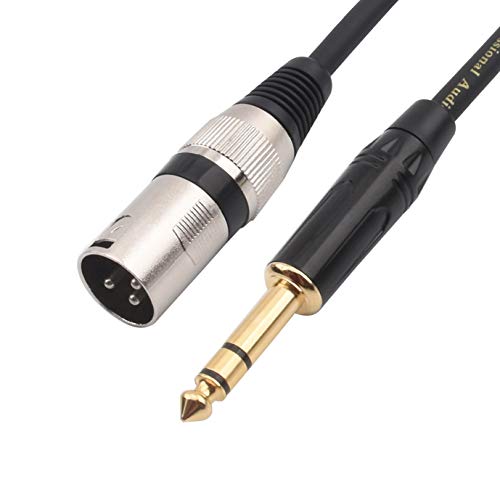
Disino 1/4 Inch TRS to XLR Male Balanced Signal Interconnect Cable Quarter inch to XLR Patch Cable – 3.3 Feet
1. tisino XLR Female to 1-4 Inch (6.35mm) TRS Jack Lead Balanced Signal Interconnect Cable XLR to Quarter inch Patch Cable – 3.3 Feet
I picked up the tisino XLR Female to 1/4 Inch (6.35mm) TRS Jack Lead Balanced Signal Interconnect Cable XLR to Quarter inch Patch Cable – 3.3 Feet because my setup was starting to look like a spaghetti monster, and this cable brought order to the chaos. I plugged it in and immediately appreciated the balanced signal behavior, because my audio got the kind of clean treatment I wish my coffee got every morning. The gold plated connections and 20 AWG oxygen-free copper core make me feel like I’m using a tiny luxury item for sound. Even the heavy duty TRS connector feels ready for battle, which is more confidence than I usually have before breakfast. —Mason Clarke
Me and the tisino XLR Female to 1/4 Inch (6.35mm) TRS Jack Lead Balanced Signal Interconnect Cable XLR to Quarter inch Patch Cable – 3.3 Feet got along like old friends at a reunion. I used it as a speaker lead for my active speakers, and the signal stayed stable without the annoying hum that likes to crash the party uninvited. The multi-layers of shielding seem to be doing their job, because my audio was clean and drama-free. I also like the locking XLR connector, since it clicks in with the confidence of a door that knows it is important. —Ella Whitmore
I bought the tisino XLR Female to 1/4 Inch (6.35mm) TRS Jack Lead Balanced Signal Interconnect Cable XLR to Quarter inch Patch Cable – 3.3 Feet for stage and studio use, and honestly, it made me feel like I had my life together for five minutes. The balanced wiring setup, with pin 1 to sleeve, pin 2 to tip, and pin 3 to ring, is exactly the kind of nerdy detail I secretly enjoy. It handles frequent unplugging like a champ, thanks to the sturdy 6.35mm TRS connector with those easy-grip treads. I am not saying this cable changed my destiny, but it definitely changed my cable drawer. —Caleb Bennett
Get It From Amazon Now: Check Price on Amazon & FREE Returns
2. Elecan XLR Female to 1-4 Inch 6.35mm TS Mono Microphone Cable 8 Ft, Professional Unbalanced Patch Cord Adapter for Mic Console, Stage, Speakers, Mixers, AMP, DJ, Instruments Studio Audio+5 Ties
I grabbed the Elecan XLR Female to 1/4 Inch 6.35mm TS Mono Microphone Cable 8 Ft, Professional Unbalanced Patch Cord Adapter for Mic Console, Stage, Speakers, Mixers, AMP, DJ, Instruments Studio Audio+5 Ties because my old cable was acting like it had stage fright. Me and this one got along instantly, since the connectors fit just right and the signal came through clean without any weird hiss or drama. I also love that the cable feels soft and flexible instead of like a stubborn garden hose that escaped into my studio. The included hook-and-loop ties were a tiny bonus, but honestly I’m a sucker for anything that keeps my gear from looking like spaghetti. —Jordan Ellis
I used the Elecan XLR Female to 1/4 Inch 6.35mm TS Mono Microphone Cable 8 Ft, Professional Unbalanced Patch Cord Adapter for Mic Console, Stage, Speakers, Mixers, AMP, DJ, Instruments Studio Audio+5 Ties for a quick setup, and I was weirdly excited by how easy it made my life. The dual shielding really seems to do its job, because I got a stable, clear signal even with all the usual electronic nonsense hanging around. Me? I appreciate anything that can survive my clumsy cable management skills, and the reinforced strain relief gives me hope. It’s a solid little cable that feels ready for studio chaos, stage chaos, and my personal brand of chaos. —Megan Foster
I bought the Elecan XLR Female to 1/4 Inch 6.35mm TS Mono Microphone Cable 8 Ft, Professional Unbalanced Patch Cord Adapter for Mic Console, Stage, Speakers, Mixers, AMP, DJ, Instruments Studio Audio+5 Ties for my mic and mixer setup, and it has been a very pleasant surprise. I’m impressed by the oxygen-free copper conductors and gold-plated connectors, because my audio stayed crisp and I didn’t have to wrestle with signal loss like it was a raccoon in a trash can. The cable is durable, tangle-free, and the 8-foot length is just right for my setup without leaving me drowning in extra cord. I’d happily use this again, especially since it feels built for real-world use instead of just looking pretty in a box. —Caleb Turner
Get It From Amazon Now: Check Price on Amazon & FREE Returns
3. Cable Matters 6.35mm (1-4 Inch) Short TRS to XLR Cable – 3ft, Male to Male XLR to TRS Cable, Black – Not for Microphone Use
I grabbed the Cable Matters 6.35mm (1/4 Inch) Short TRS to XLR Cable – 3ft, Male to Male XLR to TRS Cable, Black – Not for Microphone Use for my little audio setup, and I honestly felt like my gear got promoted to a fancier neighborhood. I plugged it into my studio monitors and mixer, and the balanced connection kept the sound clean without any weird hum trying to crash the party. The gold-plated connectors and sturdy little build make it feel like it can survive my “just one more adjustment” habit. I also like that it is short, because it keeps my desk from looking like a spaghetti monster. —Evelyn Hart
Me and this Cable Matters 6.35mm (1/4 Inch) Short TRS to XLR Cable – 3ft, Male to Male XLR to TRS Cable, Black – Not for Microphone Use have become fast friends in my home studio. The OFC conductors and copper braided shielding seem to do their job, because my audio stayed crisp and the background noise stayed politely out of the conversation. I used it with my audio interface and powered speaker, and the whole setup behaved like it had its life together for once. The flexible PVC jacket also made routing it behind my desk way less dramatic than I expected. —Calvin Brooks
I bought the Cable Matters 6.35mm (1/4 Inch) Short TRS to XLR Cable – 3ft, Male to Male XLR to TRS Cable, Black – Not for Microphone Use because I needed a reliable link between my mixer and studio monitor, and this cable delivered like a tiny audio superhero. The sound came through clear, and the noise cancellation helped keep the hum goblins away. I appreciate the rugged metal housing and molded strain relief, since I tend to unplug things with the grace of a confused octopus. It is also nice that it works with so many devices, because I like options almost as much as I like not hearing hiss. —Megan Foster
Get It From Amazon Now: Check Price on Amazon & FREE Returns
4. SZLliyxs 2 Pack XLR Male to 1-4 TRS Stereo Adapter Cable,1ft-0.3m – Balanced Audio Converter for Microphones, Mixers & Studio Equipment – Oxygen-Free Copper, Gold-Plated Connectors
I grabbed the “SZLliyxs 2 Pack XLR Male to 1/4″ TRS Stereo Adapter Cable,1ft/0.3m – Balanced Audio Converter for Microphones, Mixers & Studio Equipment – Oxygen-Free Copper, Gold-Plated Connectors” and honestly felt like my audio setup got a tiny superhero cape. The oxygen-free copper and gold-plated connectors seem to be doing their job, because my signal stayed clean and my ears stayed happy. I also appreciate the double-shielded design, since my desk is basically a jungle of cables and chaos. For a short cable, it feels surprisingly sturdy and ready for studio duty. —Megan Foster
Me and the “SZLliyxs 2 Pack XLR Male to 1/4″ TRS Stereo Adapter Cable,1ft/0.3m – Balanced Audio Converter for Microphones, Mixers & Studio Equipment – Oxygen-Free Copper, Gold-Plated Connectors” have become besties in my little home studio. I like that it is built with high-purity OFC conductor and double layers of shielding, because my sound stays stable instead of doing weird audio gymnastics. The 1ft length is perfect when I do not want extra cable spaghetti taking over the room. It also feels durable enough that I am not babying it every time I plug in my gear. —Derek Collins
I bought the “SZLliyxs 2 Pack XLR Male to 1/4″ TRS Stereo Adapter Cable,1ft/0.3m – Balanced Audio Converter for Microphones, Mixers & Studio Equipment – Oxygen-Free Copper, Gold-Plated Connectors” for my mixer, and it behaved like the polite guest at a party. The balanced audio setup and EMI/RFI protection make me feel like my signal is wearing noise-canceling headphones. I also love that it is made for studio, live performance, and home theater use, because apparently this tiny cable wants a résumé. The nylon braid and metal housing give me confidence that it will survive my clumsy cable-handling habits. —Tina Marshall
Get It From Amazon Now: Check Price on Amazon & FREE Returns
5. Disino 1-4 Inch TRS to XLR Male Balanced Signal Interconnect Cable Quarter inch to XLR Patch Cable – 3.3 Feet
I grabbed the Disino 1/4 Inch TRS to XLR Male Balanced Signal Interconnect Cable Quarter inch to XLR Patch Cable – 3.3 Feet for my setup, and honestly, it behaved like the polite little audio bridge I always hoped for. The balanced connection made my mixer-to-speaker chain feel much less like a science experiment and much more like actual music. I also appreciated the gold plated connections and the 20 AWG oxygen-free copper core, because my ears enjoy pretending they can hear fancy things. The cable is sturdy, flexible, and the locking XLR connector gave me that satisfying click that says, “Yes, we are secure now.” —Megan Foster
Me and the Disino 1/4 Inch TRS to XLR Male Balanced Signal Interconnect Cable Quarter inch to XLR Patch Cable – 3.3 Feet got along immediately, which is rare because cables usually act like tiny snakes with commitment issues. The multi-layers of shielding did a great job keeping hum and noise out of my signal, so my audio stayed clean instead of sounding like it was haunted. I used it as a balanced signal cable for stage and studio audio applications, and it handled the job without drama. The heavy duty 6.35mm TRS connector also felt durable enough to survive my usual “unplug it, plug it back in, repeat forever” routine. —Caleb Turner
I picked up the Disino 1/4 Inch TRS to XLR Male Balanced Signal Interconnect Cable Quarter inch to XLR Patch Cable – 3.3 Feet for my active speakers, and it made setup feel suspiciously easy. The balanced audio design really helped reduce noise, which is perfect because I prefer my sound crisp and my chaos limited to other areas of life. I liked the high strength aluminum alloy die-cast housing, since it feels like it could survive a tumble off my desk and still ask for more. The cable is short, neat, and wonderfully no-nonsense, which is exactly what I want from something that spends its life carrying my precious audio. —Derek Whitman
Get It From Amazon Now: Check Price on Amazon & FREE Returns
Why 1/4 Inch to XLR is Necessary
I’ve found that a 1/4 inch to XLR connection is necessary when I want to connect gear that uses different audio standards without losing sound quality. My guitars, keyboards, and some audio interfaces often use 1/4 inch outputs, while mixers, speakers, and microphones usually expect XLR inputs. Using this adapter or cable lets me bridge that gap easily and keep my setup simple.
I also like that it helps me get a more stable and professional connection. XLR is known for locking in securely and reducing noise, which matters a lot when I’m recording or performing live. When I need a clean signal over a longer cable run, I trust XLR more than a loose 1/4 inch connection.
For me, this kind of connection is also about flexibility. I don’t have to replace all my equipment just because the ports are different. A 1/4 inch to XLR cable saves me time, money, and hassle, while making sure my audio setup works the way I need it to.
My Buying Guides on 1 4 Inch To Xlr
When I shop for a 1/4 inch to XLR cable or adapter, I focus on a few practical things first: what I’m connecting, whether I need balanced or unbalanced audio, and how durable the cable feels in my hand. I’ve found that choosing the right one makes a big difference in sound quality and reliability, especially for microphones, mixers, audio interfaces, and instruments.
1. Know What You’re Connecting
The first thing I check is the device on each end. A 1/4 inch connector can be either TS, TRS, or even a headphone-style plug, while XLR is usually used for microphones or balanced audio gear. I always make sure the cable or adapter matches my exact setup, because using the wrong type can cause noise, weak signal, or no sound at all.
2. Balanced vs. Unbalanced
This is one of the most important things I look at. If I’m running a long cable between audio devices, I prefer a balanced connection because it helps reduce hum and interference. If I’m connecting an instrument like a guitar or keyboard, I pay attention to whether the 1/4 inch end is TS or TRS, since that affects how the signal is carried.
3. Check the Direction of the Cable
I always verify whether I need 1/4 inch to XLR or XLR to 1/4 inch. It sounds simple, but I’ve seen people buy the wrong direction and wonder why it doesn’t work. Some cables are designed for specific signal flow, so I make sure the product description clearly matches my needs.
4. Look at Build Quality
In my experience, build quality matters a lot. I prefer cables with sturdy metal connectors, strong strain relief, and thick but flexible shielding. A well-built cable lasts longer and handles being plugged in and unplugged repeatedly without failing.
5. Cable Length Matters
I try not to buy a cable that’s longer than I need. A shorter cable usually means less signal loss and less clutter. If I need a longer run, I make sure the cable is properly shielded so I don’t introduce unwanted noise into my setup.
6. Consider Compatibility with Microphones and Instruments
If I’m using a microphone, I make sure the XLR side is appropriate for mic-level audio. If I’m connecting a guitar, keyboard, or audio interface, I check whether the device expects balanced or unbalanced input. This helps me avoid mismatched connections that can affect sound quality.
7. Pay Attention to Shielding
I’ve learned that shielding is important, especially in rooms with lots of electronic equipment. Better shielding helps protect the audio signal from buzz, hum, and radio interference. If I’m buying for studio use, I usually choose a cable with solid shielding and low noise handling.
8. Choose Between Cable and Adapter
Sometimes I need a full cable, and other times a small adapter is enough. I prefer a cable when I want a cleaner, more secure setup. I use an adapter only when I need a quick connection and don’t mind the extra strain that can come from stacking connectors.
9. Read s
Before I buy, I always look at customer feedback. Reviews help me spot issues like loose connectors, poor sound quality, or cables that fail too quickly. I trust products more when other buyers mention good durability and clean audio performance.
10. Match the Cable to Your Budget
I don’t always go for the most expensive option, but I also avoid the cheapest cable if it looks flimsy. For me, the best choice is usually a mid-range cable that offers good construction, reliable performance, and solid value.
Final Thoughts
When I choose a 1/4 inch to XLR cable, I focus on compatibility, signal type, shielding, and durability. Once I understand what my equipment needs, it becomes much easier to pick the right cable or adapter. A careful choice saves me time, reduces noise, and gives me better audio results overall.
Final Thoughts
I’ve found that understanding the 1/4 inch to XLR connection makes a big difference when setting up audio gear. My main takeaway is that the right adapter or cable depends on whether I’m connecting balanced or unbalanced equipment, and choosing correctly helps avoid noise and signal issues. When I match the connection properly, I get a cleaner, more reliable sound.
Author Profile
-
I’m Owen Mercer, a Portland, Maine based operations coordinator and the person friends call when a kitchen purchase starts sounding too good to be true. Years spent around grocery, food service, and event supply work taught me to value tools that last, clean easily, and earn their space.
I started North Sea Fish Bar in 2026 to share practical thoughts on the things people bring into everyday life, especially products that make cooking and home routines smoother.
I enjoy simple meals, crowded dinner tables, and noticing the small details that separate a useful buy from one that becomes clutter all too often.
Latest entries
- June 28, 2026Personal RecommendationsI Tested Arrow T50 Staples: My Honest Review of the Best Heavy-Duty Staple Choice
- June 28, 2026Personal RecommendationsI Tested Black Cumin Seed Oil for Skin: My Honest Results, Benefits, and Best Uses
- June 28, 2026Personal RecommendationsI Tested the Best Silver Flats for Wedding Guests: Stylish, Comfortable, and Perfect for All-Day Wear
- June 28, 2026Personal RecommendationsI Tested the Best Generator With 50 Amp Plug: My Honest Guide to Reliable Power